A virtual hairstyle try-on is most helpful when you treat it as a sketch, not a promise. It can make a short bob or curtain fringe feel less abstract before an appointment, but it cannot tell you how your own cowlick will dry on a rainy Tuesday. Used well, it gives you better questions for the mirror and a clearer reference for a haircut consultation.
Use a try-on to start a useful conversation, not to order an exact copy
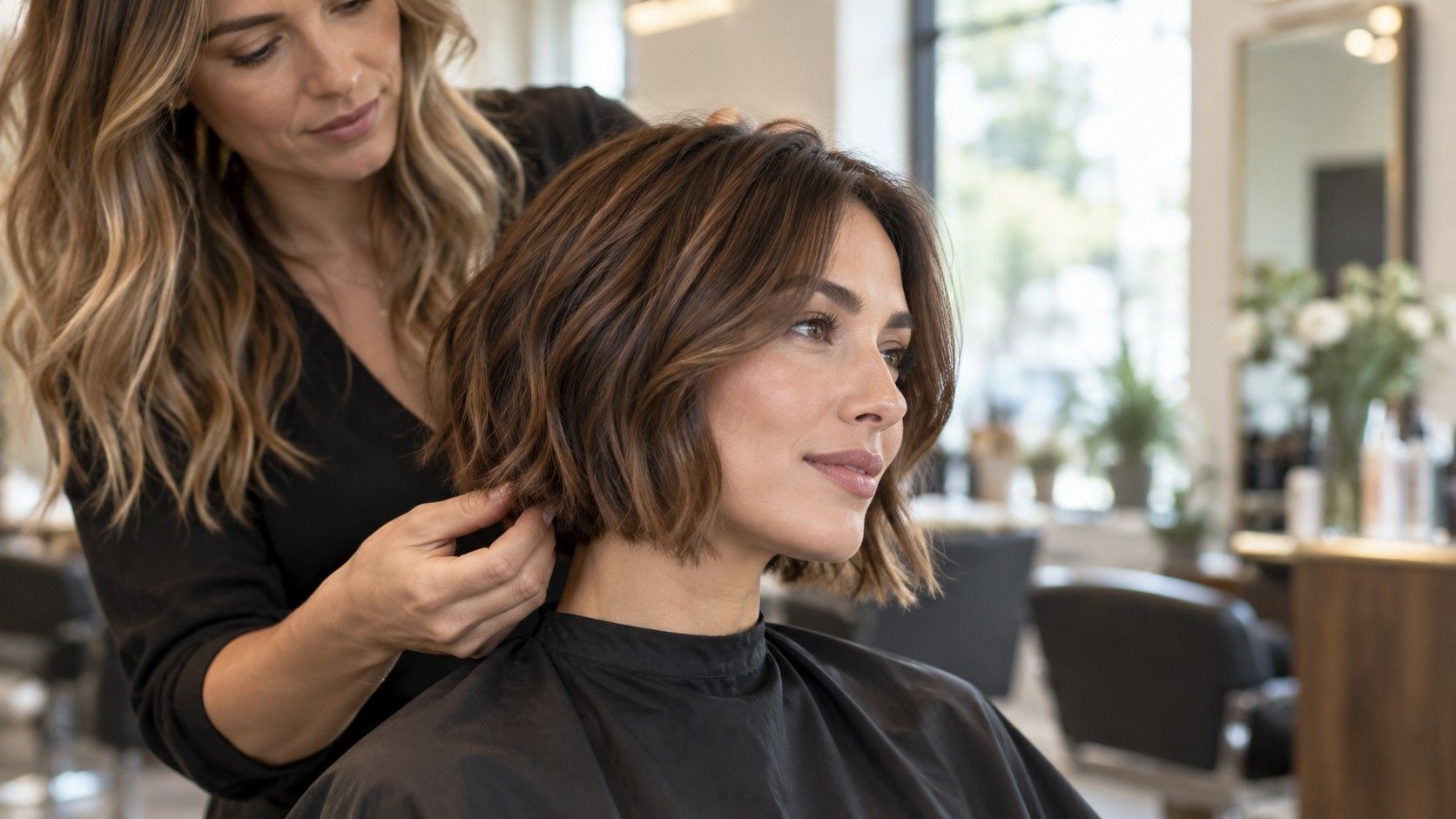
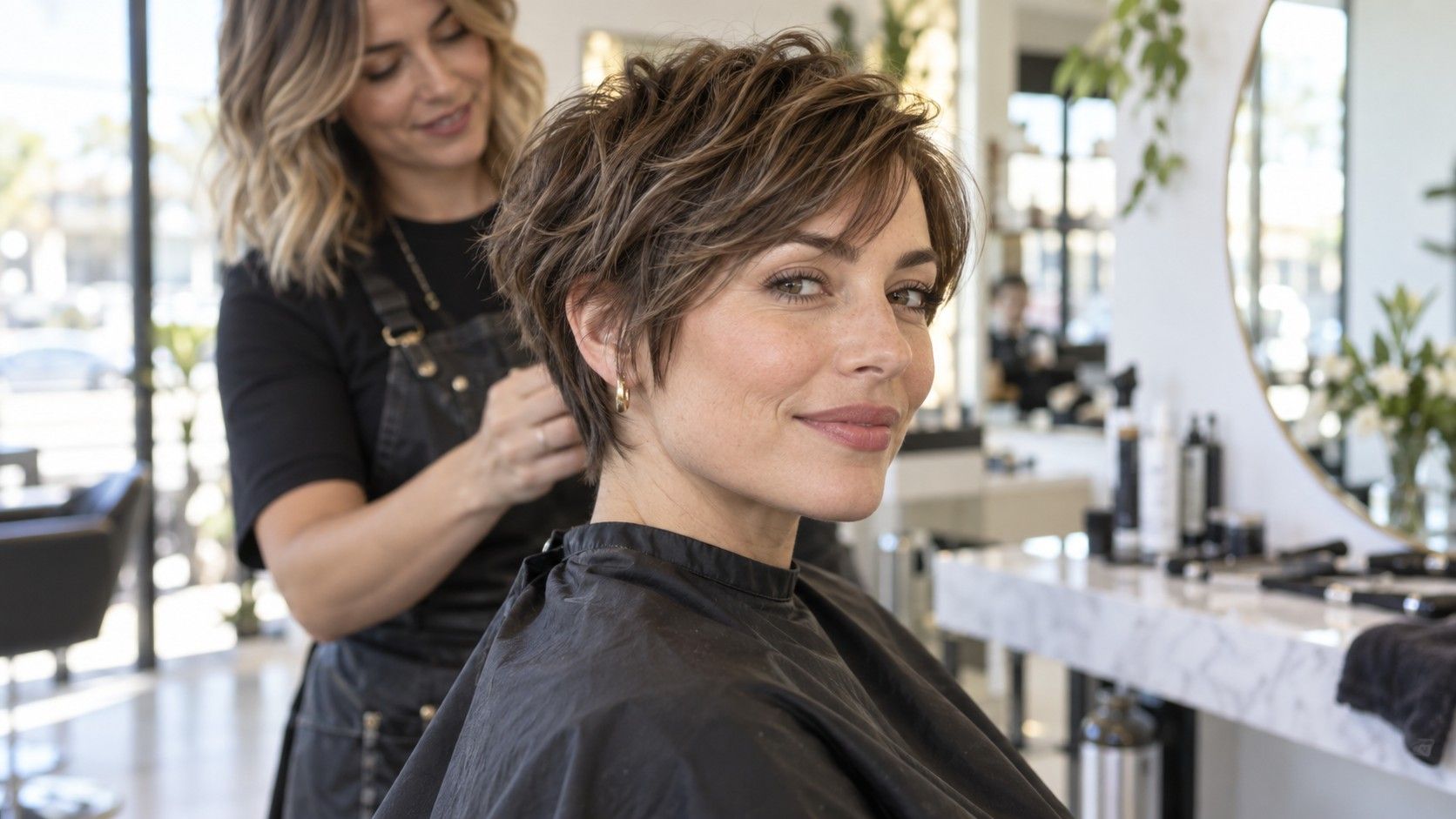
The real value of a hairstyle simulator is comparison. Put a shoulder-length cut next to a chin-length cut and you can see which length changes the balance around your jaw. Try a centre part and then a side part, even if you think you already know your preference. Often the surprise is not the haircut itself but how much the part changes the impression of the face.
Save two or three results that answer different questions rather than twenty versions of the same look. One image might show the length you like, another the fringe shape, and a third the amount of layering. At the salon, those separate references are more useful than one heavily edited result. They let a stylist explain which elements will work together on your density and which would compete for the same small amount of hair.
Choose a photo that gives the tool a fair starting point
A front-facing photo in even daylight gives the most readable result. Stand near a window with the light in front of you, not behind you, and keep the camera at eye level. Strong overhead lighting creates shadows under the nose and jaw that can make a simulated fringe look harsher than it would in person. Avoid beauty filters, portrait blur, sunglasses, and a hand covering the hairline; all of them hide the landmarks the preview needs.
Pull long hair behind the shoulders if you are testing a shorter cut, but do not flatten it tightly against the head. The point is to show your natural hairline, parting, and the width around the temples. If your hair is curly or wavy, use a photo in its usual state as well as a straighter reference if you regularly heat-style it. A cut that looks balanced on a smooth photo can behave very differently once texture expands around the cheeks.
Test length, parting and fringe one decision at a time
Trying every change at once makes it difficult to know what you actually responded to. Begin with length: compare collarbone, shoulder, jaw, and pixie territory while keeping the same colour and part. Then keep the chosen length and move the part. A deep side part can add lift at the crown, but it also asks more of a stubborn growth pattern than a softer off-centre part.
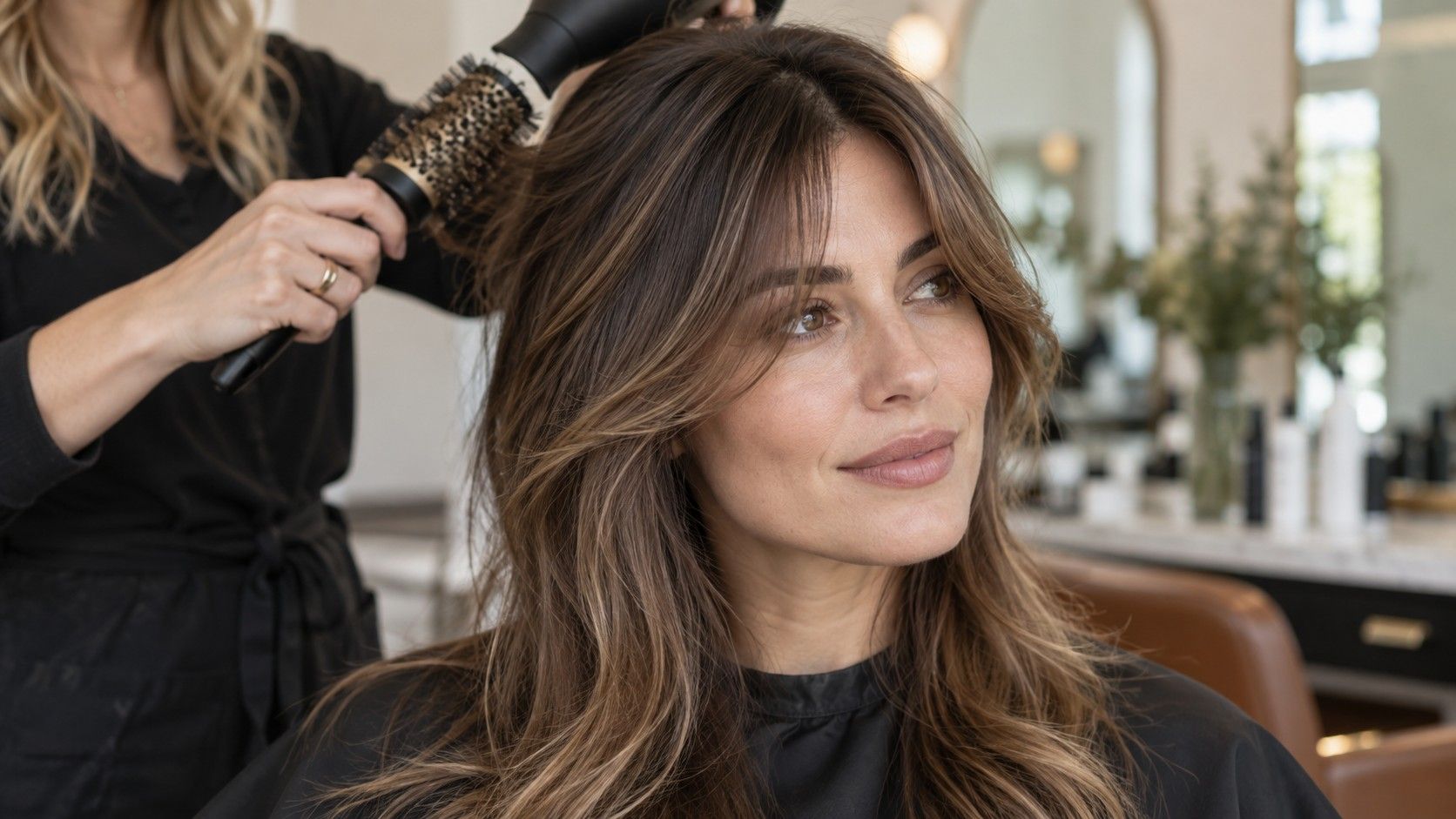
Fringe deserves its own round of testing. A full blunt fringe, airy fringe, curtain fringe, and face-framing layers occupy different amounts of forehead and require different daily attention. Look at the preview in a small phone-sized view as well as full screen. A fringe that looks dramatic at full size may simply read as a nice frame in ordinary conversation. Also imagine it one centimetre longer: hair rarely stays at the exact length of a salon-day photograph for long.
| Feature to test | What the preview can show | What to check in real life |
|---|---|---|
| Overall length | Balance near chin and shoulders | Neckline, shrinkage, daily styling time |
| Parting | Visual symmetry and crown direction | Natural growth pattern and volume |
| Fringe | Forehead coverage and face frame | Cowlicks, glasses, trim frequency |
| Layers | General movement around the face | Density, curl pattern and ends |
Notice what a simulator cannot predict
Most virtual previews smooth hair into a tidy surface. They do not know whether your hair bends at the nape, loses volume after an hour, or doubles in width in humid air. Texture is the biggest missing variable. Fine hair may need a blunt baseline to look full, while thick hair may need internal weight removed so a bob does not become triangular. Neither decision is visible from a flat overlay.
Face shape is useful vocabulary, but it should not become a rulebook. The angle of your jaw, the height of your forehead, glasses, brows, and the way you hold your head all affect whether a style feels like you. Use the try-on to notice proportions, then check them in a real mirror from a slight angle. A picture freezes one expression; a haircut has to work when you talk, laugh, look down, and put it behind an ear.
Make a realistic length estimate before you commit
If the preview suggests a dramatic change, use a simple physical check. Hold the ends of your hair at the proposed length with a clip, then walk around the room for ten minutes. Sit down, put on the jacket you wear most, and look at the shape in a mirror that is farther away than a bathroom mirror. This does not recreate a layered cut, but it reveals whether a jaw-length line feels liberating or unexpectedly exposed.
For curly hair, remember shrinkage. A length that appears at the shoulder while wet may sit much higher once it is dry. For a fringe, pin a small front section at the intended point and let it move naturally. The exercise is not glamorous, but it is more honest than asking a digital overlay to solve every question. A clear length estimate helps avoid the classic disappointment of agreeing on a photo without agreeing on where the hair should land.
Turn saved results into a better salon reference
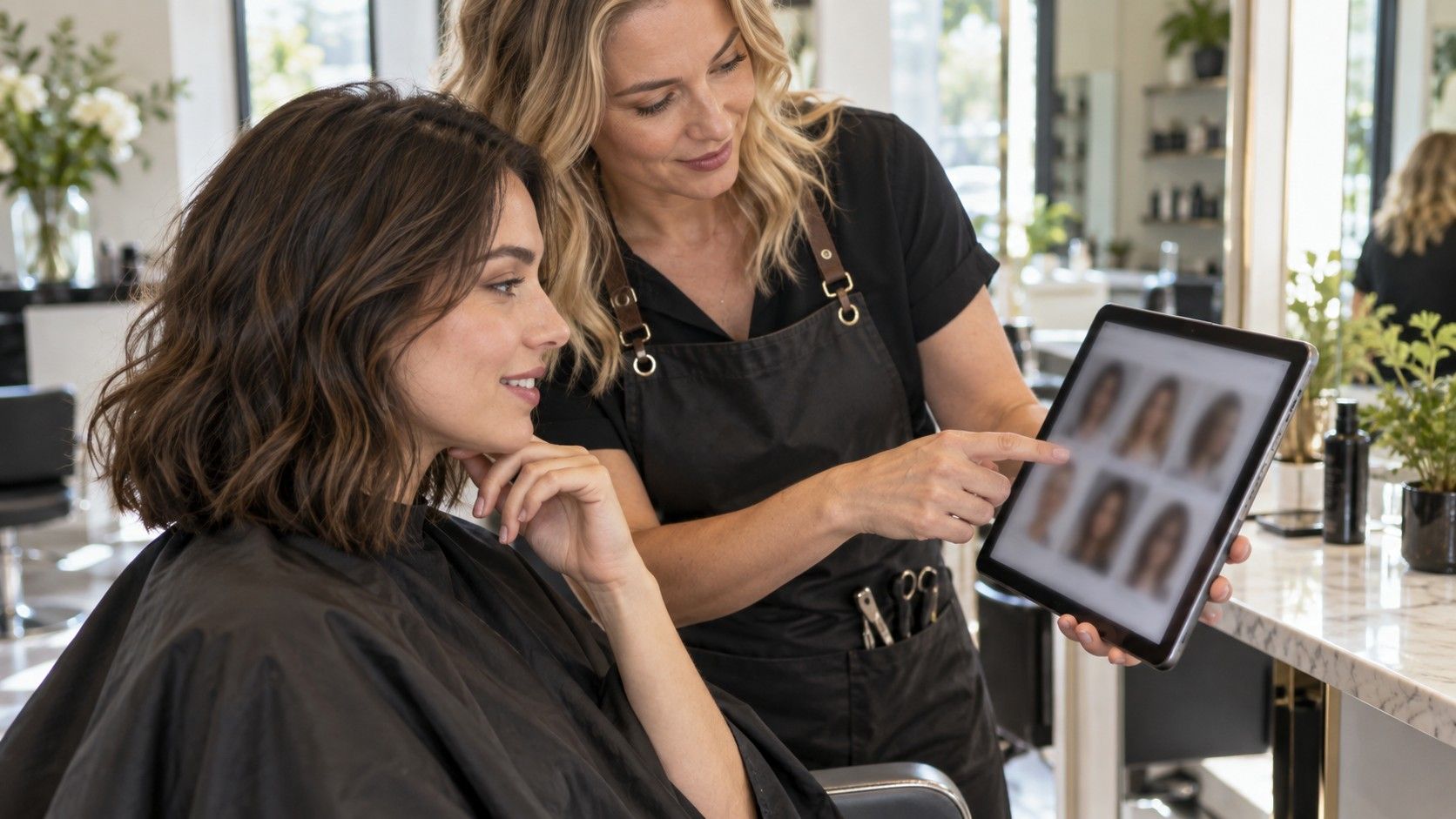
Bring a small set of images and say what you like in each one. Instead of saying, “I want this exact cut,” try: “I like this collarbone length, this soft opening around the cheekbones, and this fringe that can separate.” That gives the stylist room to adapt the idea to your texture. Mention what you do not want too: a style that needs daily hot tools, a fringe in your eyes, or layers that disappear when you air-dry.
Ask what maintenance the version that suits you will need. A sharp bob may require regular reshaping, while longer layers can be more forgiving but may lose their outline slowly. Ask how the cut should be dried on an ordinary morning and whether the reference assumes a blowout. A virtual hairstyle try-on has done its job when it makes your expectations specific. The final decision still belongs in a conversation with someone who can see your hair move, not only your face on a screen.