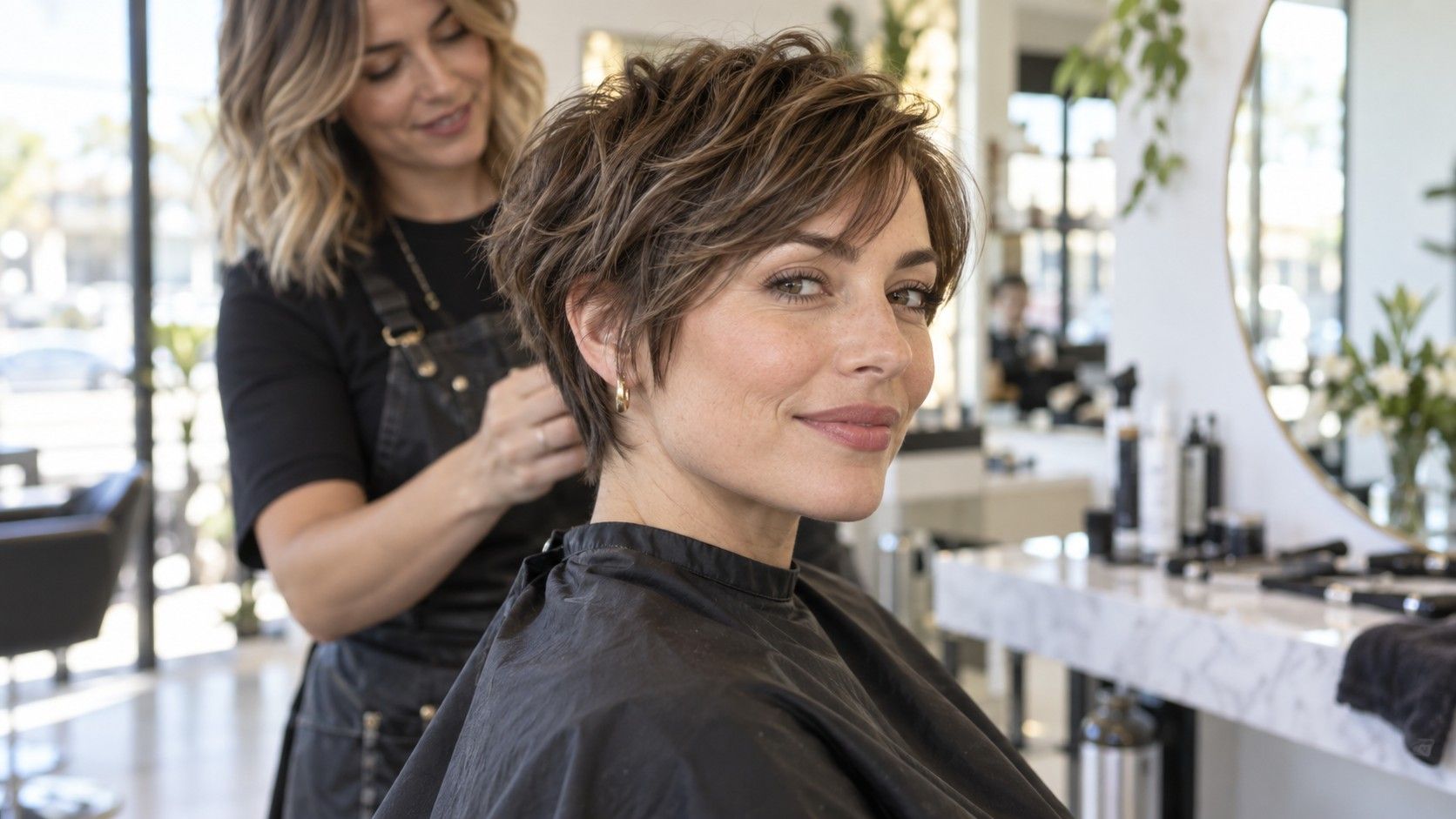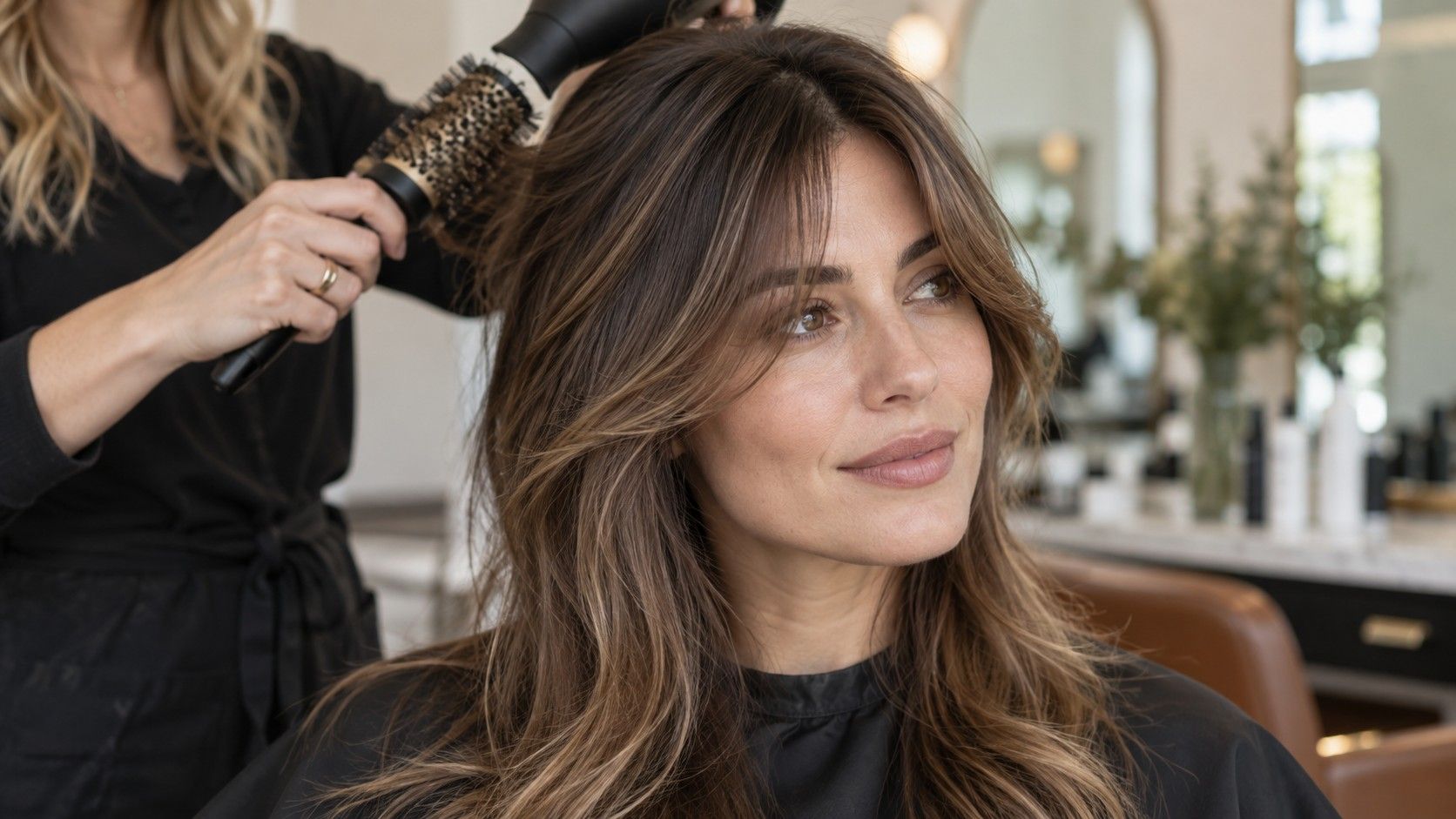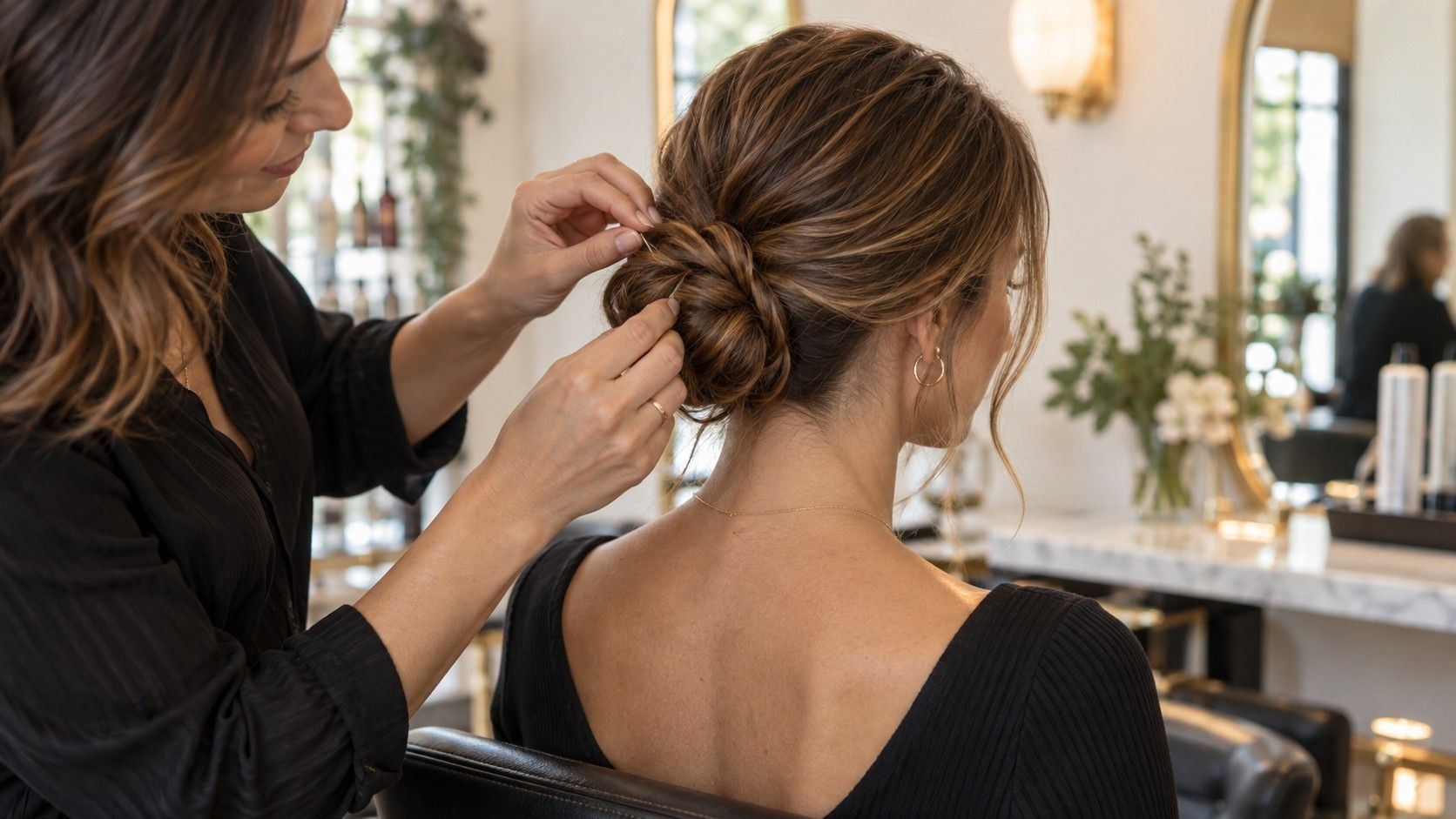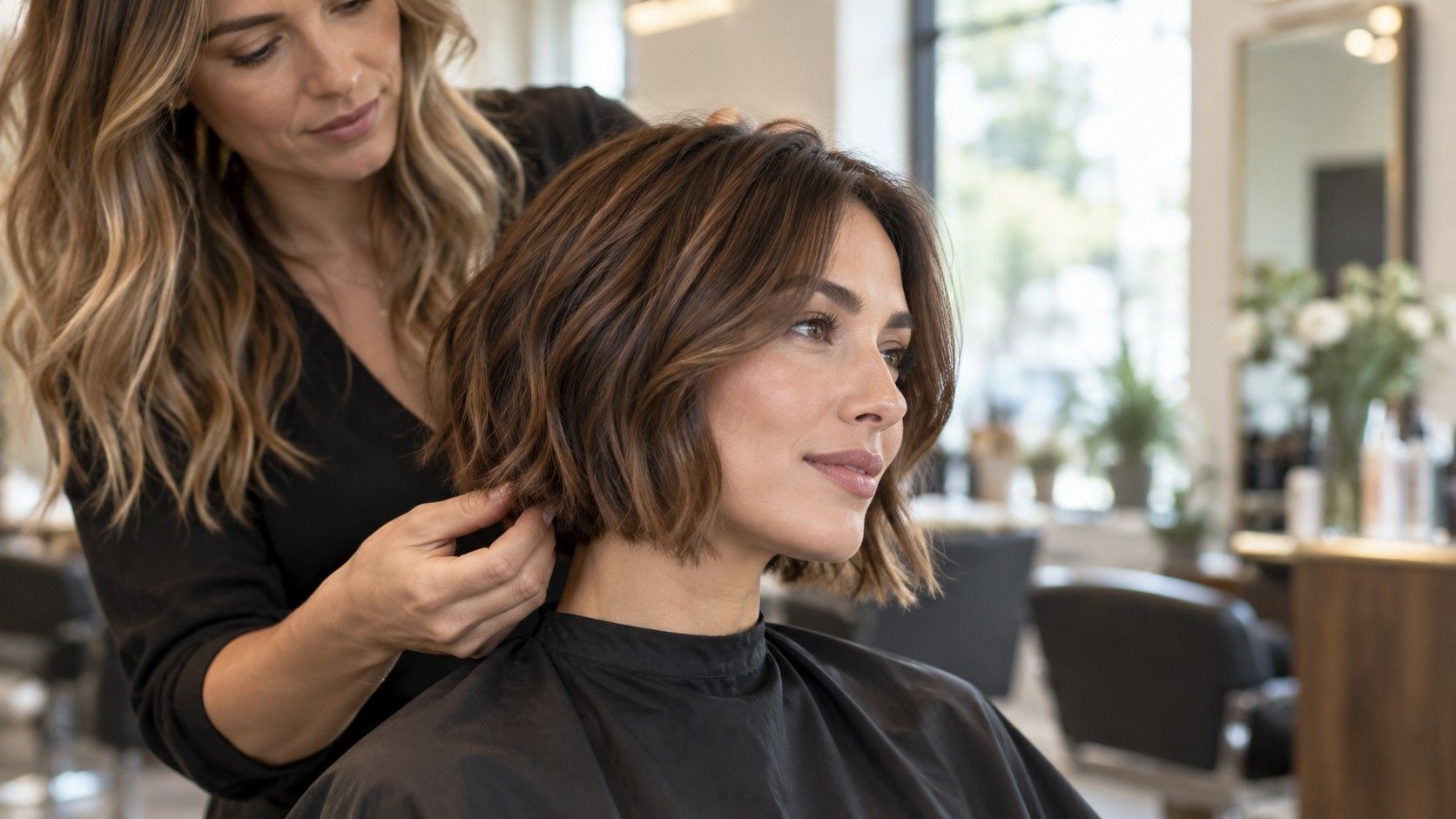
The best bob haircuts are not a single short length with a fashionable name. A bob is a family of shapes: blunt or broken-up, chin length or collarbone length, heavy at the ends or lifted at the nape. Choosing one gets easier when you start with your hair density, daily styling tolerance, and the point on your neck or jawline that you actually want the cut to emphasize.
Start with the practical difference between bob styles
A bob is generally shorter than shoulder length, but that definition leaves a lot of room. A classic chin-length bob makes the jawline a central feature. A lob reaches toward the collarbone and behaves more like medium-length hair: it can be tucked, tied, and styled in more than one direction. A French bob sits higher, often around the mouth or jaw, while an Italian bob tends to look fuller and more polished around the neck.
These labels are useful shorthand, not fixed instructions. Two people can ask for the same French bob and leave with different cuts because one has fine straight hair and the other has dense waves. The former may need a heavier baseline to avoid transparent ends. The latter may need carefully placed internal weight removal so the sides do not expand into a triangle when the hair dries naturally.
Before collecting bob haircut ideas, notice what your current hair does at the nape. Does it flip out? Does it form a strong cowlick? Does it flatten underneath while the sides puff up? A bob exposes these habits because there is less length to weigh them down. The best result is based on them rather than designed to pretend they do not exist.
Blunt, graduated, and textured bobs solve different problems
A blunt bob has a strong, nearly even perimeter. It gives fine hair an immediate sense of density and can look striking with a clean center part. It also makes every uneven end visible, so it rewards regular trims and a smoother finish. If you like a casual air-dried look, ask for a blunt outline with subtle internal softness rather than a ruler-straight line that needs daily heat to feel right.
A graduated bob is shorter at the nape and gradually longer toward the front. That angle can create lift at the back and keep the face area from feeling too cropped. The important detail is restraint. Heavy stacking at the nape can date quickly and may grow out awkwardly if you only trim a few times a year. A soft graduation gives the same useful support without looking like a separate shelf of hair.
Textured bobs use point cutting or longer broken-up sections to reduce a blocky shape. They suit hair with natural bend and people who prefer movement over a polished line. Texture should not mean thinning everything out. On fine hair, too much texture leaves gaps; on thick hair, it can make the ends frizz instead of move. Ask where the weight will remain, especially around the perimeter and temples.
| Bob type | Strong point | Consider before choosing |
|---|---|---|
| Blunt bob | Makes fine hair look denser | Shows uneven growth and likes regular shaping |
| Graduated bob | Builds lift at the nape | Needs a controlled angle to grow out well |
| Textured bob | Gives waves and thicker hair movement | Too much thinning can create frizz |
| Lob | Offers the most styling and tying options | Has less dramatic neck and jaw definition |
Choose a length around your jawline, neck, and routine
Chin length is not a neutral choice. It brings attention to the lower face and can be beautiful when the line is placed intentionally, but a cut landing exactly at the widest point of the jaw may feel broader in the mirror than expected. Moving the edge an inch above or below can change that effect. The same is true at the neck: a short nape reveals posture, collars, and the way you like to wear jewelry.
Think about ordinary clothing. A bob that rests on a high turtleneck or a structured jacket collar can turn outward every time you get dressed. A slightly shorter cut clears the collar; a longer lob sits below it. This sounds minor in the salon, yet it determines whether you spend each morning correcting the ends with a straightener. Haircuts live with coats, bike helmets, headphones, and scarves, not just with a cape and good lighting.
If you are nervous, begin with a lob that reaches the collarbone. It gives you the clean outline of a bob while preserving enough length for a partial tie-back. Once you know how your texture behaves at that length, going shorter is a clearer decision. Cutting straight to the jaw can be exciting, but it is also a bigger adjustment for someone who relies on a ponytail after the gym or on humid days.
Adapt a bob for fine, thick, wavy, or curly hair
Fine hair usually benefits from a compact shape. A blunt or gently rounded baseline keeps the ends from looking stringy, while a few invisible internal layers can prevent the crown from lying flat. Avoid asking for lots of short texture because it sounds modern. If the hair is already low-density, every removed piece has a visible cost. Root lift and a strategic part often add more than additional cutting.
Thick hair has the opposite challenge: a one-length bob can feel helmet-like, especially at the sides. The answer is targeted weight removal through the interior, not shredded ends. A stylist can preserve a solid perimeter and reduce bulk where hair stacks near the occipital bone. On wavy hair, have the cut assessed dry or at least after the natural wave pattern is visible; otherwise shrinkage can turn a comfortable length into a surprise.
Curly hair needs a shape that respects spring and distribution. A bob does not need to be round, but it needs enough room for curls to expand without forming a shelf at the sides. Discuss whether you diffuse, air-dry, or regularly straighten. One cut cannot behave identically in all three modes, so choose the routine that represents most of your week and make that the baseline for the design.
Plan the styling and trim routine before you commit
A short bob usually asks for more frequent shaping than long hair because a few weeks of growth changes its line at the nape and around the ears. Four to eight weeks is common for a precise bob, while a relaxed lob may go longer. That is not a sales pitch for more appointments; it is simply the trade-off for a silhouette that relies on placement. If you know you prefer three trims a year, choose a softer, longer version.
Your styling tools matter too. A blunt bob can look finished with a paddle brush and dryer, while a curved bob benefits from a round brush or hot brush at the ends. Wavy textured bobs may need only a diffuser and a small amount of cream. Be honest about what you will use. The right cut is the one that looks intentional after your own ten-minute routine, not only after a professional has sectioned every strand.
At the consultation, describe a bad hair day as clearly as a good one. Say whether the nape flips, the crown separates, or the sides expand in damp weather. Those details let a stylist choose among the many types of bob haircuts with a real purpose. A good bob should make your existing texture easier to read, not demand that you replace it with a completely different one every morning.