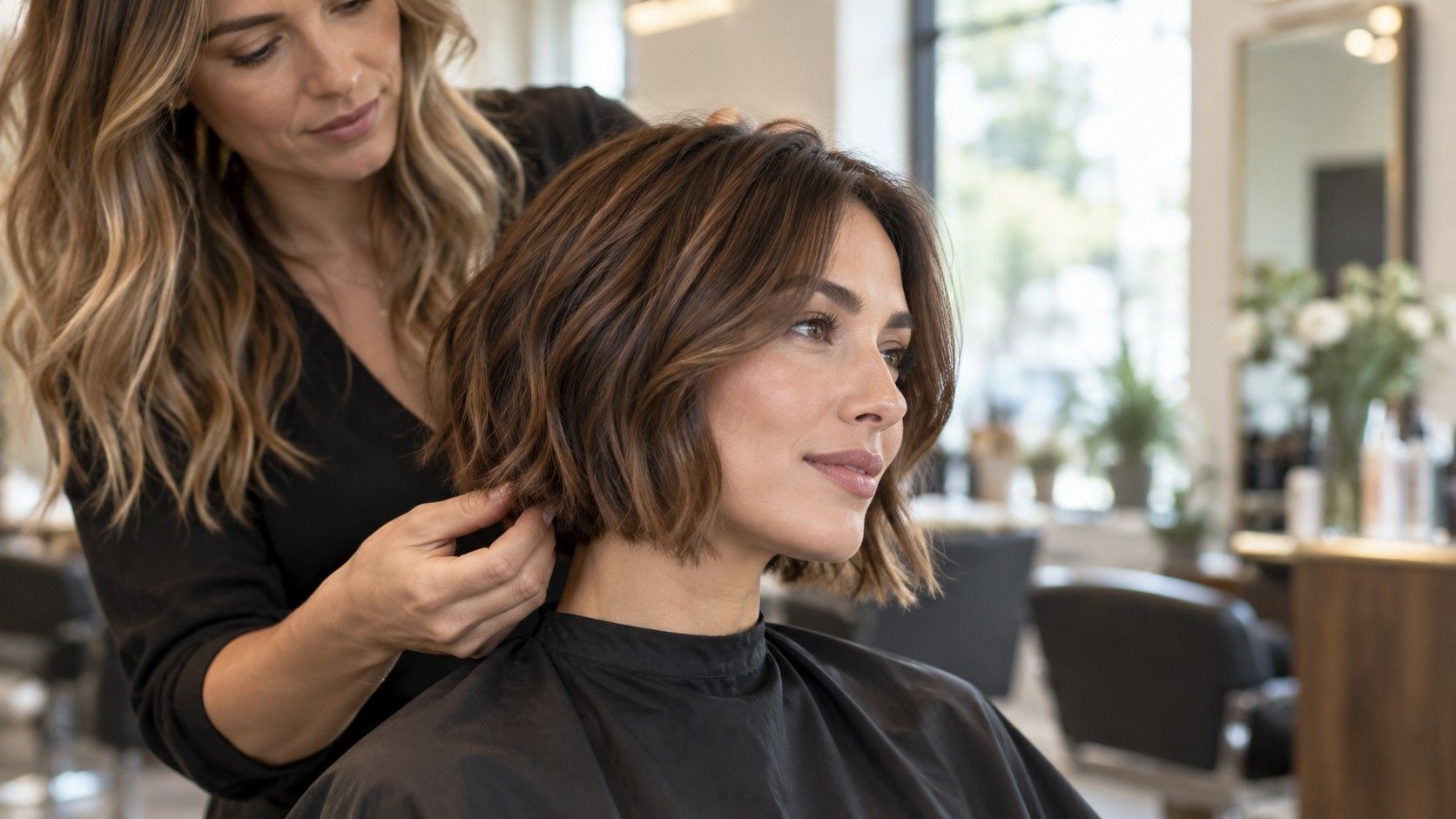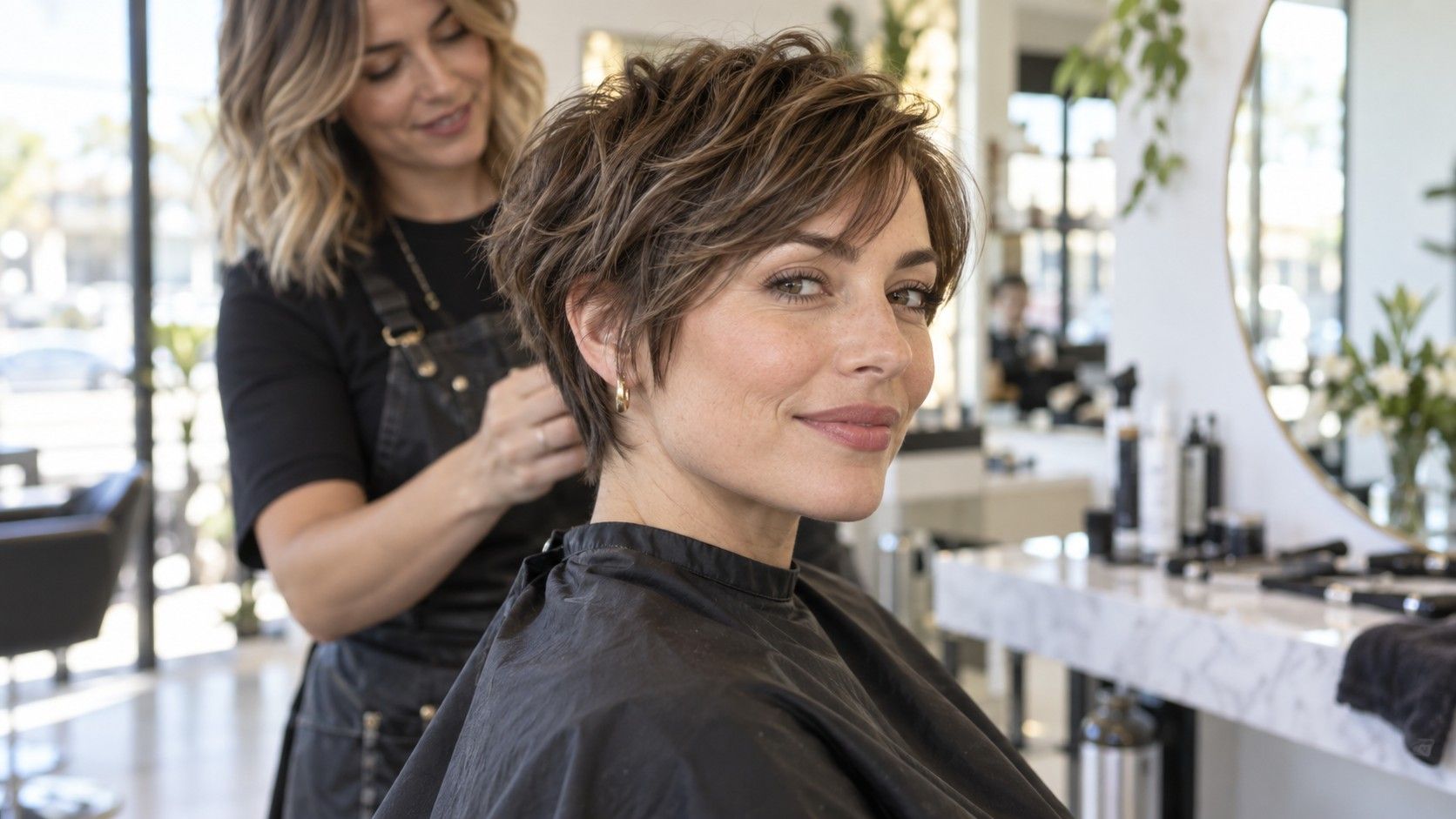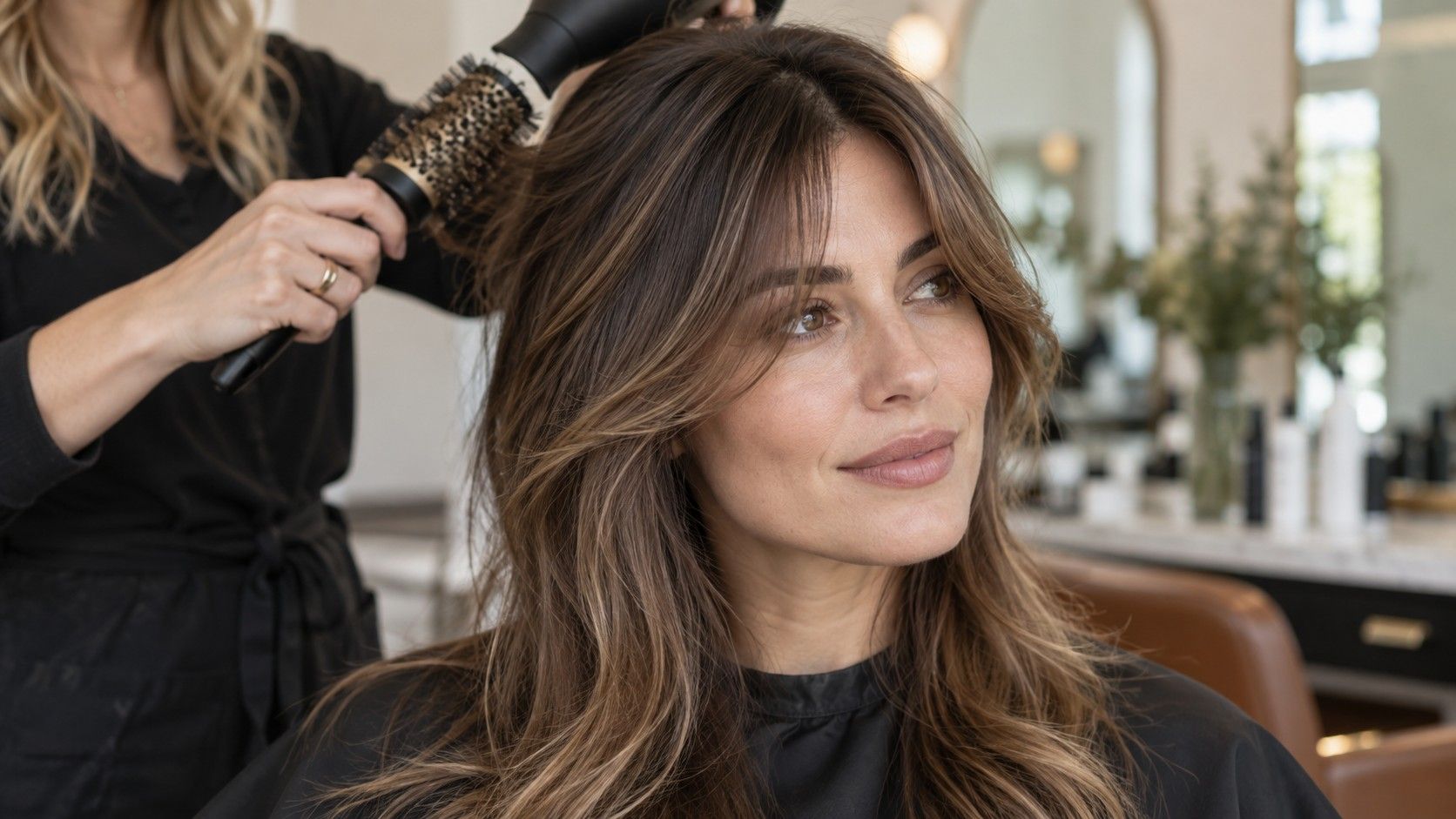
Curtain bangs are appealing because they promise a visible change without the commitment of a dense straight fringe. They part around the face, grow into layers more easily, and can look relaxed rather than rigid. The practical version is less automatic: their length, your natural part, and the direction of your cowlick decide whether they look soft or split into two stubborn commas by lunchtime.
What curtain bangs actually do differently
Unlike a blunt fringe, curtain bangs are longest at the outer edges and usually shorter toward the center. That graduation creates an opening over the forehead and sends the eye toward the cheekbones. The result is face framing, not a solid line across the brows. It is why this curtain bangs hairstyle can work with long hair, lobs, and textured bobs without making every haircut look like the same cut.
The name can be misleading. Curtain bangs do not need a perfect center part, and they do not have to be extremely short. Some start around brow level and sweep toward the cheekbone; others begin closer to the bridge of the nose and blend almost invisibly into long layers. The right version depends on how much forehead you want covered and how much styling you are willing to do before leaving home.
They are not a cure for every face-shape concern, and nobody can promise universal suitability from one photograph. A useful haircut works with the proportions you notice in the mirror and with your everyday habits. If you wear glasses, let the stylist see them. If you tuck hair behind your ears all day, mention it. Those small details change where a fringe needs to sit.
Pick the length by checking your real hairline
The shortest point is the decision that matters most. Brow-skimming curtain bangs make a stronger statement and give more coverage at the center, but they need frequent attention when they grow into the eyelashes. A longer, cheekbone-starting version is gentler and often easier for a first fringe. It still frames the face, while leaving enough length to pin back when you do not want hair in your eyes.
Look at your hairline when it is dry and unstyled. A widow's peak, two uneven corners, or a strong cowlick may push the split away from the center. That is not a flaw to fight with more product. A stylist can place the part where the hair naturally separates, make one side fractionally longer, or leave enough weight near the roots to stop the fringe from springing open.
| Starting length | Useful for | Daily reality |
|---|---|---|
| Brow to bridge of nose | A more obvious fringe and forehead coverage | Needs a quick reset after sleep |
| Cheekbone length | A soft first fringe that can blend into layers | Usually easier to pin back |
| Jaw-length curtain pieces | Long hair that needs face framing, not a true fringe | Low maintenance but less visible |
| Side-swept split | A strong off-center part or cowlick | Works best when cut to that part |
Do not decide from a reference photo alone. Hair texture changes the apparent length: a wavy fringe jumps upward, while very straight fine hair may separate and look longer than expected. It is reasonable to begin slightly longer. You can remove a little more at the next appointment; putting length back is a much slower adjustment.
Center part, side part, and the cowlick problem
A center part is the classic match for curtain bangs because it creates a balanced opening, but balance is not the same as forcing symmetry. If your scalp naturally sends the hair to one side, a strict middle split can expose the roots and make the bangs collapse. Try parting the hair just off center, then follow the direction it settles when air-dried. A half-inch shift often makes the difference.
Cowlicks are most visible when the fringe is cut too short or too light. The hair wants to lift in one spot, and a wispy center gives it no counterweight. A slightly longer center, a more substantial triangular section, or a soft diagonal transition can work better. The answer is rarely a hard blast of hairspray; that tends to make the bangs look separated and brittle by the afternoon.
When you sit in the salon chair, let the fringe be cut with your normal part in place. Then ask to see it moved once or twice. If the style falls apart immediately, the cut may be too dependent on one exact setup. A flexible fringe should tolerate a windy walk, a headset, or the moment you sweep it aside to wash your face.
How to style curtain bangs in five practical minutes
The fastest reliable method starts while the fringe is damp. Isolate it before drying the rest of your hair, mist it if it has dried crooked, and brush it from side to side under warm air for thirty seconds. This resets the cowlick and stops it from drying in a deep, stubborn part. Then divide it roughly where you want the opening, rather than trying to force two perfectly matched halves.
Use a small or medium round brush only at the roots. Roll each side away from the face, warm it, and release it once the hair has cooled slightly. The aim is a soft bend and root lift, not a barrel curl. If the ends curl under too much, pull them straighter while they cool or use a flat brush for the final pass. A little lightweight cream on the tips can calm flyaways without gluing the fringe together.
For a no-heat morning, dampen only the bangs and clip each side away from the face while you make coffee or apply makeup. The result is less polished, but it is often enough to restore the split. Learning how to style curtain bangs is mostly about accepting that the front section needs attention before the rest of the hair, not about owning a drawer full of tools.
Keep the fringe intentional between appointments
Bangs show oil and product faster than the rest of the hair because they sit on the forehead. Washing just the fringe at the sink can save a hairstyle on day two. Use a small amount of shampoo, rinse thoroughly, and dry it immediately; leaving it damp against the skin encourages it to separate. Dry shampoo can help at the roots, but too much powder makes soft pieces look dusty.
Most curtain bangs need a small trim every three to six weeks, depending on their starting length and how sharply you want the center to sit. A professional trim is safer than chasing the shape at home. The issue is not simply taking off length: both sides have a diagonal line and a connection to the face-framing layers, so one quick snip can create a visible notch.
When the fringe begins to feel annoying, it does not automatically mean the haircut failed. Try changing the part, adding a little root lift, or blending it into the side layers for a week. Curtain bangs have a useful grow-out path precisely because they can become cheekbone pieces. With a cut that respects your natural part and a simple drying routine, they remain an adaptable feature rather than a daily argument with the mirror.