The best short hairstyles for women are the ones that still make sense after the salon blow-dry disappears. Short hair can be liberating, but it exposes the details: the nape grows out, the fringe changes after one wash, and a cut that needs a round brush every morning is a different commitment from one that works with a little cream and your hands. Start by choosing the level of shortness and maintenance you genuinely want.
Decide how short you really want to go
“Short” covers a lot of ground. A jaw-length bob still gives you enough hair to tuck behind the ear or collect with clips. A cheekbone-length crop changes the balance around the face but leaves some softness. A pixie puts the ears, neck, and hairline in full view. Before booking, pull your hair up and pin the sides back, then take photographs from the front, side, and back. It is not a substitute for a haircut, but it reveals whether you enjoy seeing your neckline and face without a curtain of hair.
Length at the nape is the practical dividing line. A soft, longer nape grows out quietly and feels less exposed. A close crop looks sharper, but the shape can blur quickly if you skip a trim. If your job, gym routine, or climate makes you wear your hair up most days, a short bob may offer the better compromise. It gives a visible change while preserving enough length for an elastic or claw clip when you need it.
Compare a pixie, bixie, and short bob before choosing
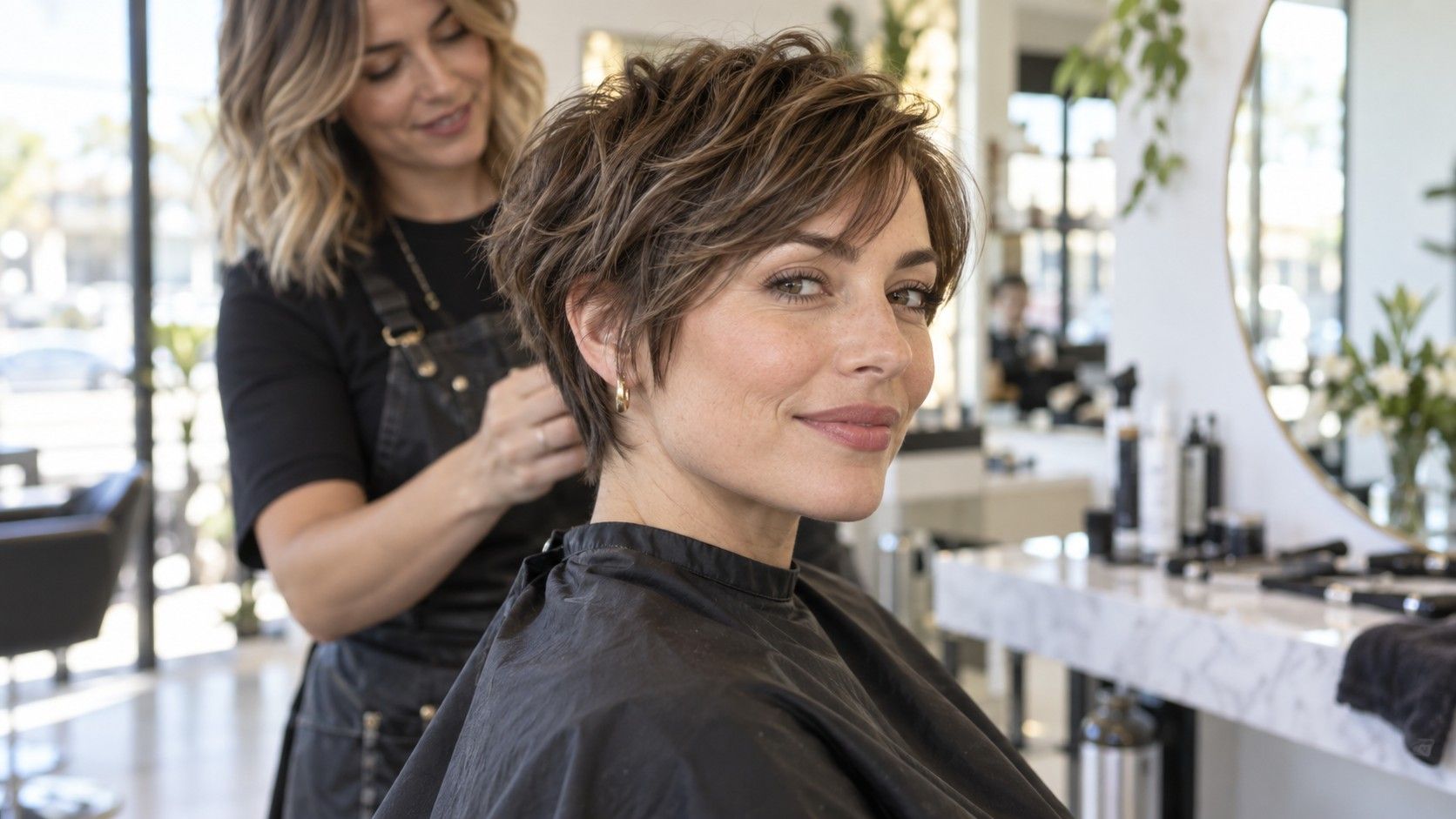
A pixie is usually the shortest option, with close sides or nape and more length through the top. It can be neat, piecey, swept forward, or pushed up. The appeal is its clarity: the cut announces itself. The trade-off is that small changes in growth are obvious. If you enjoy styling products and are comfortable visiting the salon every four to six weeks, a pixie can be remarkably versatile rather than restrictive.
A bixie sits between a pixie and a bob. It has more softness around the ears and nape, often with disconnected-looking layers or a longer fringe. This is one of the most forgiving short haircut ideas for someone who wants movement without going fully cropped. It can look deliberately undone, which is useful when your natural texture is wavy or when you do not want every strand to look polished. On very fine hair, however, ask for enough weight at the perimeter so the shape does not collapse.
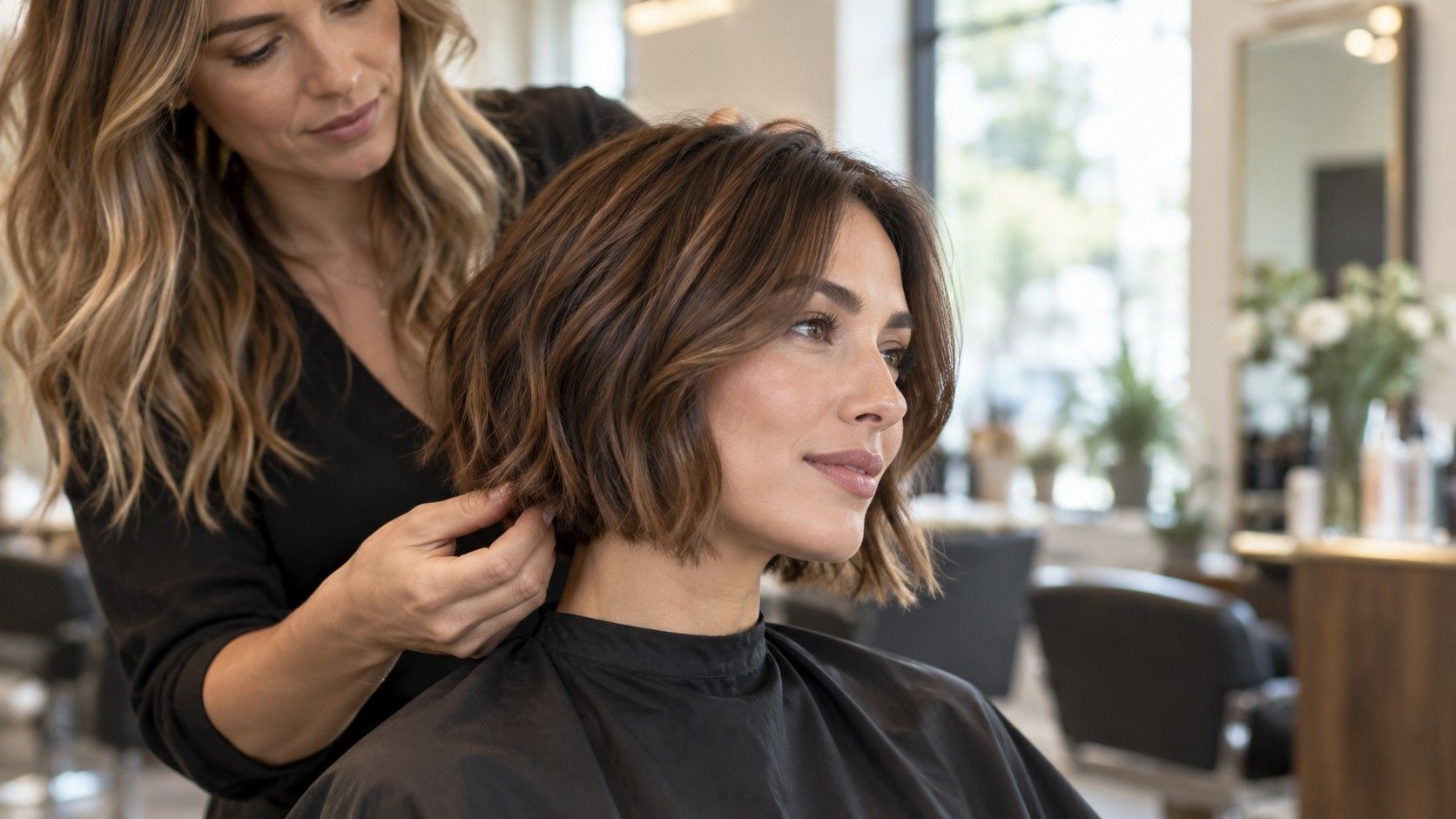
A short bob is more graphic. It can be blunt, gently rounded, softly layered, or angled longer in front. The baseline is what makes it feel chic, but it also means the length matters. A line that ends exactly at a strong jaw may emphasize it; a line just below the chin often has more room to move. This cut is a good choice if you like a tidy silhouette and do not mind using a dryer or straightener occasionally to keep the ends intentional.
| Cut | Best for | Typical styling | Trim rhythm |
|---|---|---|---|
| Pixie | People who enjoy a clear, exposed shape | Paste or cream; 5–10 minutes | 4–6 weeks |
| Bixie | Soft texture and an easier grow-out | Air-dry product or quick blow-dry | 6–8 weeks |
| Short bob | A polished line with some flexibility | Blow-dry or smoothing pass for the ends | 6–10 weeks |
Choose volume for your real texture
Short hairstyles do not erase texture; they amplify it. Fine straight hair often benefits from a compact shape and a stronger baseline, because too many short layers can leave the ends thin. A subtle side part or a small amount of root lift can add life without turning the style into a helmet. If your hair gets oily at the scalp, a very layered pixie may also show that sooner, so build your wash routine into the decision.
Wavy hair can make a bixie or layered bob look effortless, provided the cut leaves room for the wave to form. The usual mistake is cutting too many short layers into hair that shrinks as it dries; the result can become much wider than the reference. Curly hair needs a consultation based on dry or mostly dry shape whenever possible. Ask the stylist how much spring they expect from the curl at the nape and around the temples, because those areas determine whether the cut feels balanced.
Make a short cut work with your face shape
Face shape should guide the placement of width, not dictate a single haircut. A round face often benefits from height near the crown, an off-center part, or a slightly longer front. A square face can look excellent with a pixie, especially when the top has soft texture rather than a stiff, horizontal fringe. For heart-shaped faces, leave a little fullness around the jaw or ears so the lower half of the face does not disappear beneath a high, narrow crown.
For an oval face, the decision is mostly about the feature you want to emphasize. A cropped fringe makes the eyes and brows the main event. A deep side part adds drama. A short bob can put focus on cheekbones and lips. Test these choices with clips before the appointment, but do not try to force your face into a category. Your hairline, cowlicks, glasses, and how you wear makeup may affect the final shape more than a diagram does.
Know the maintenance before you book
A short cut can save wash time without saving styling time. A smooth bob may take a little heat to make the ends lie cleanly. A textured pixie may need just a pea-size amount of product, but it needs that product almost every day. Bangs are their own small project: they get damp from a shower, split in humidity, and sometimes need a two-minute refresh even when the rest of the hair is fine.
Ask for the maintenance plan in plain terms. How often should the nape be cleaned up? Can the style be air-dried? Which section will grow out first? A good stylist can explain whether the cut becomes a shaggy bob, a soft bixie, or simply an awkward in-between after eight weeks. The answer makes short hairstyles feel less risky, because you are choosing not just the first day but the entire life of the cut.
Use reference photos without copying them blindly
Bring photos with hair texture similar to yours whenever possible. A glossy, dense bob on naturally fine hair can still inspire the length and parting, but it cannot promise the same fullness. Mark what you like in each image: the neckline, the fringe, the softness around the ear, or the way the crown sits. It is more useful than saying you want the whole picture.
Also say what you will not maintain. If you never use a curling iron, do not choose a reference whose charm depends on carefully bent ends. If you wear glasses every day, ask where the side pieces will meet the frame. The strongest short hairstyles are designed around daily habits, not around a single perfect photograph. With that conversation, the right cut feels personal instead of borrowed.