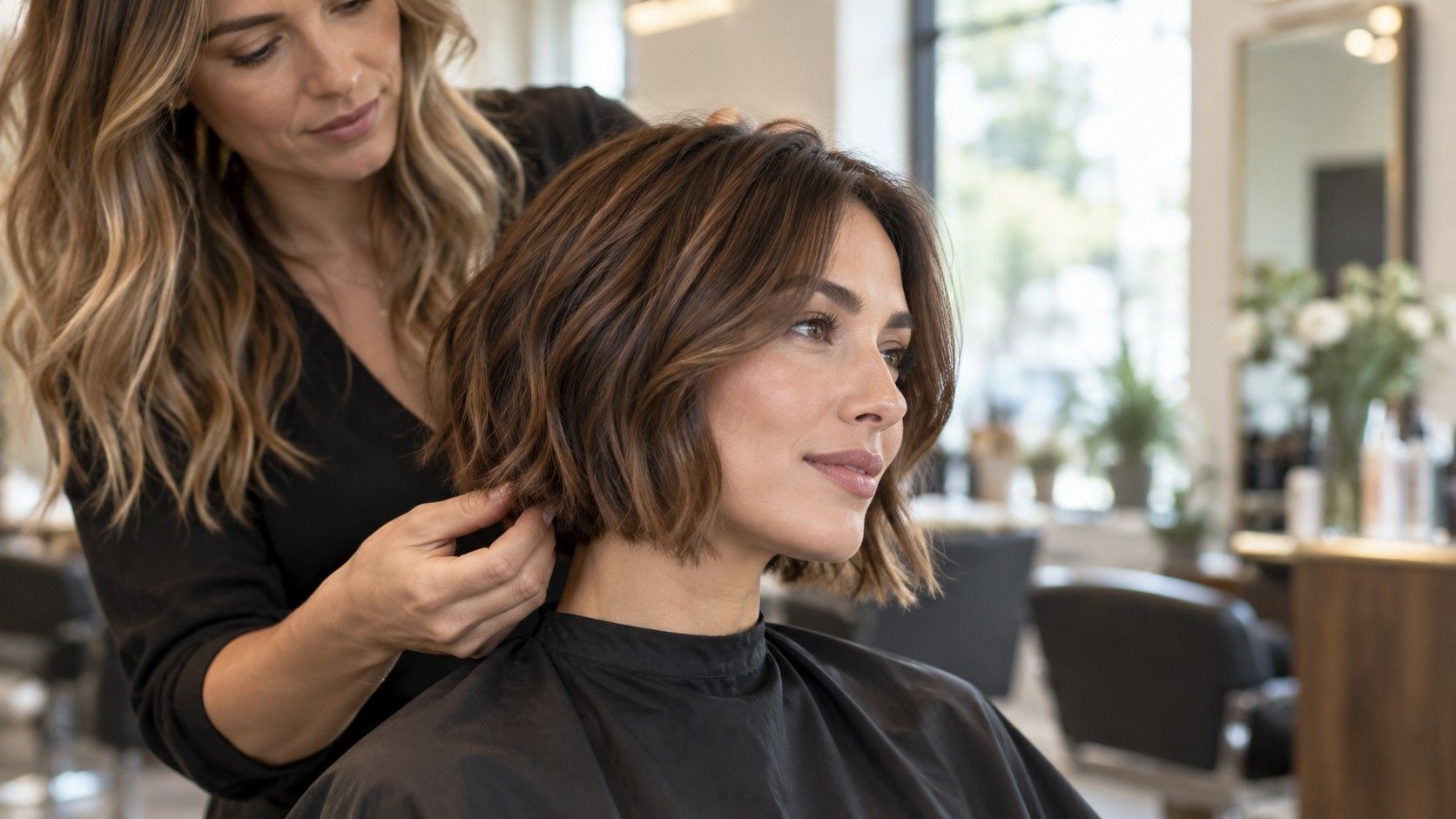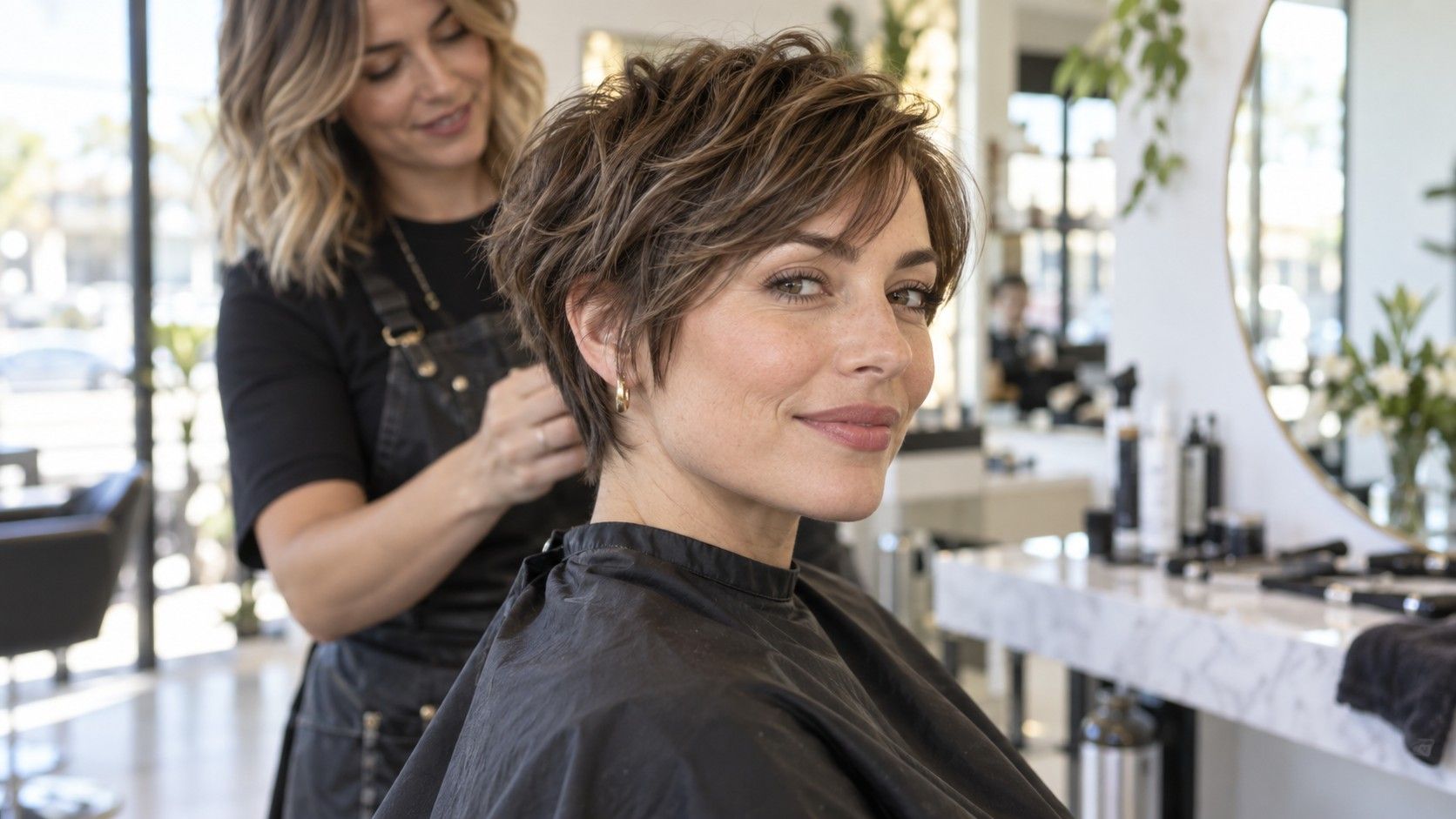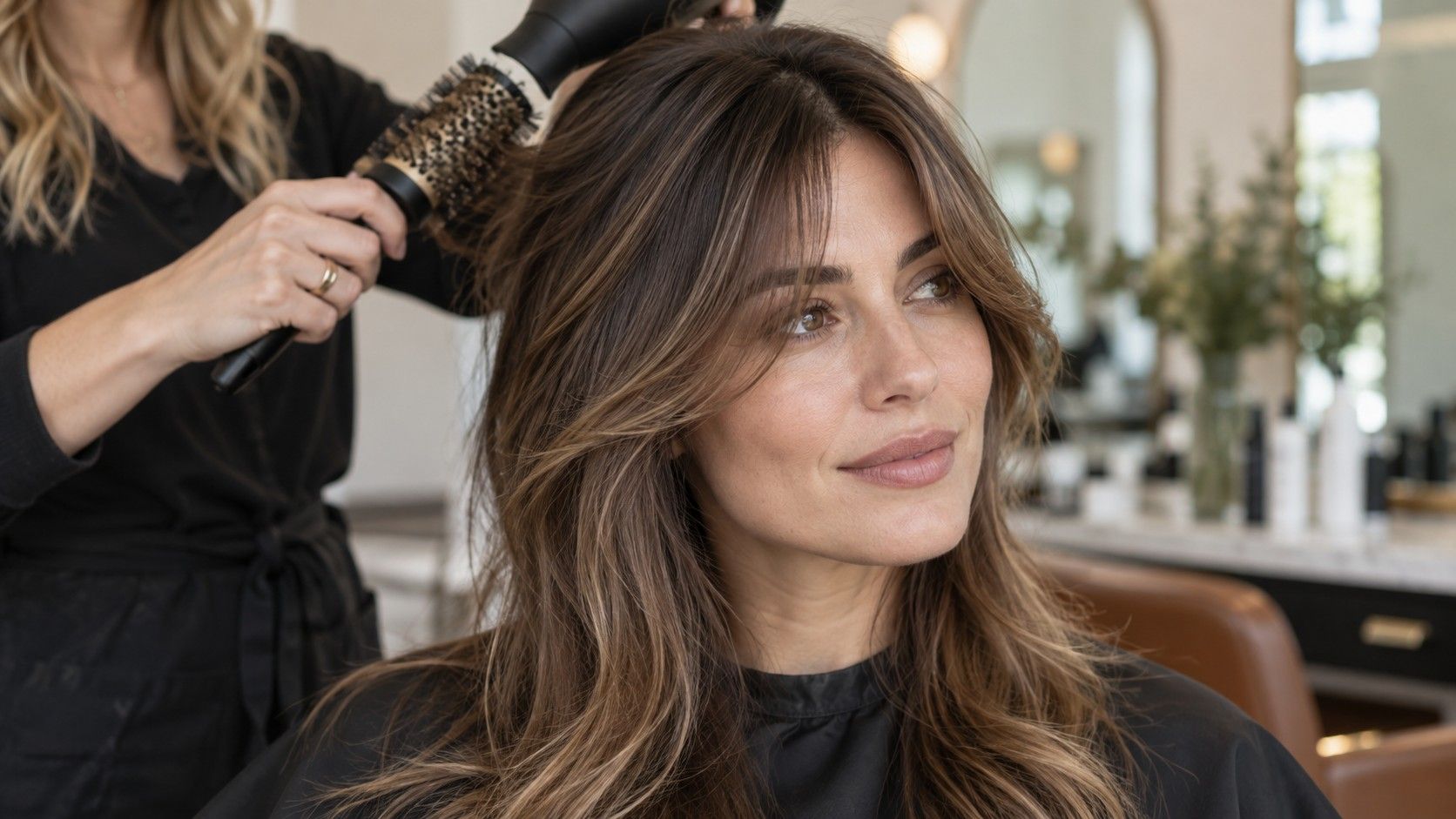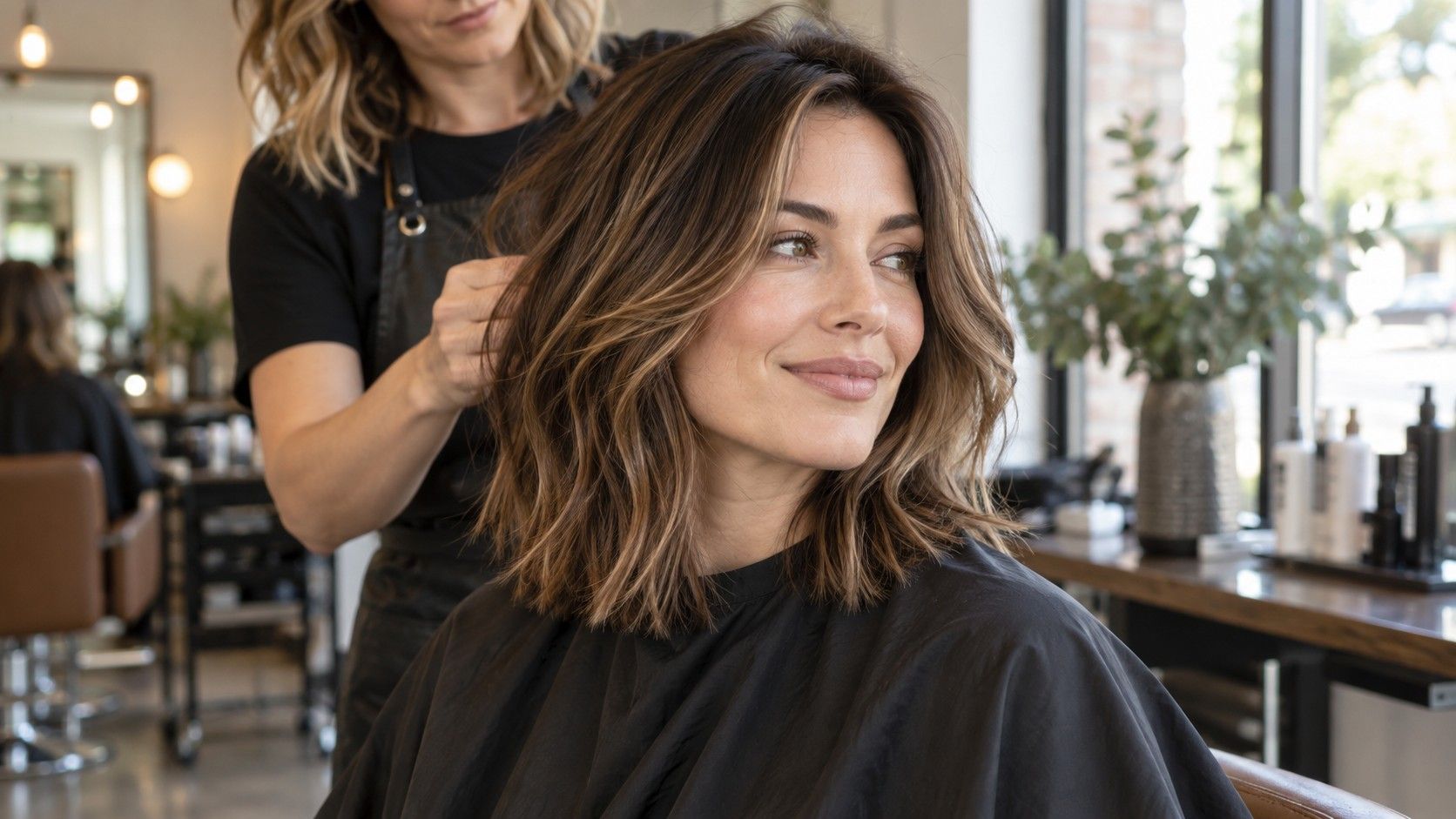
Medium-length hairstyles with layers are popular because they can add movement without the commitment of a major chop. The length is long enough to tie back and short enough to feel lighter, while layers can change the shape more than most people expect. The useful question is not whether layers are flattering in the abstract. It is where they should begin, how much weight you can spare, and whether the finished cut will still look good after an ordinary air-dry.
Understand what layers change in medium-length hair
Layers remove weight from selected areas so the hair can move rather than hang as one solid curtain. On medium length hair, that can create lift around the crown, soften the line around the face, or stop the ends from forming a heavy triangle. But layers also make the outline less blunt. If you love the dense, polished edge of a classic lob, too many layers can work against the reason you chose that length in the first place.
Look at the baseline before asking for movement. A shoulder-length cut with a strong weight line can carry gentle internal layers and still look full. A cut with already fine ends needs a lighter hand; removing more hair may make it appear stringy. This is particularly important if you color your hair or use heat often, because fragile ends do not always show their condition until they are thinned out in a layered medium haircut.
Choose long layers or short layers for your routine
Long layers begin lower down, often around the chin, collarbone, or below. They are the easier option for someone who wants shape but does not want to style every section. They blend well into a ponytail, grow out quietly, and usually keep enough density through the ends. On straight hair they add a soft swing; on waves they give the pattern somewhere to sit without making the head look overly round.
Short layers begin higher, sometimes near the cheekbones or crown. They can add visible volume and make a blowout feel bouncier, but they ask more from the wearer. When the roots flatten or the top dries oddly, those short pieces announce themselves. They can be ideal for dense hair that feels bulky, yet less helpful for fine hair that needs weight. A good consultation includes the unglamorous question: do you own a round brush, and will you really use it?
| Layer approach | What it changes | Best match | Watch for |
|---|---|---|---|
| Long layers | Soft movement and a lighter perimeter | Low-maintenance styling, fine to medium density | Layers cut too low may be barely visible |
| Short layers | Crown lift and a more textured silhouette | Dense hair, regular blowouts, lively waves | Extra styling and a wider shape as it dries |
| Internal layers | Less bulk while preserving a strong outer line | Thick hair and a blunt lob | Over-thinning can leave the ends sparse |
Pair layers with a lob or shoulder-length cut
A lob, usually sitting between the collarbone and shoulders, is a natural home for long layers. The overall outline remains calm, while the front can be shaped to turn outward, inward, or away from the face. If you like to tuck one side behind an ear, ask for the front lengths to work in that position. Some face-framing pieces look lovely loose but pop out too short the moment they meet a glasses arm or hair clip.
At true shoulder length, the ends can catch on coats, scarves, and the shoulders themselves. A few carefully placed layers reduce that shelf-like effect. The key is to keep the shortest pieces connected to the rest of the haircut. A dramatic staircase of layers may look great immediately after a salon blowout but can read choppy once the hair returns to its natural texture. Ask to see the back in a mirror after the hair has been shaken out, not only after it has been brushed smooth.
Add curtain bangs only if they fit the whole shape
Curtain bangs can make layered medium hair look intentional because they link the fringe to the face-framing sections. They work especially well when the parting is fairly consistent and you are happy to dry the fringe forward and then away from the face. On a low-maintenance routine, choose a longer curtain bang that can blend into the rest of the hair when it misbehaves. Very short center pieces are harder to hide on a humid day.
Consider the forehead, cowlicks, and hair density before making the fringe the main feature. A strong cowlick can split a middle-part fringe unless it is styled wet with tension. Fine hair may need a narrow section for the bangs so the rest of the perimeter does not lose fullness. If you are unsure, start with long, cheekbone-skimming pieces. They still create the soft frame associated with curtain bangs but give you far more room to adjust at the next trim.
Style layers without making the result fussy
The easiest styling routine starts with the right amount of product, not a cabinet full of tools. A lightweight mousse at the roots can support a medium layered haircut without making it stiff. A small amount of cream through the ends helps separated layers look deliberate. If you blow-dry, direct the roots upward first, then use a brush only on the face-framing pieces and top layer. There is no need to curl every section for the haircut to have movement.
For air-drying, avoid touching the hair repeatedly while it dries. That is how soft waves turn into frizz and how short layers become unpredictable. Part the hair where you usually wear it, apply product evenly, and let the shape settle. Once dry, a few drops of oil on the ends can make the perimeter look healthier, but keep it away from the roots. Fine hair especially can go from glossy to flat with a little too much product.
Ask for a shape that grows out well
A layered cut is not finished when the stylist puts down the scissors. It should still make sense six to ten weeks later, when the crown has gained length and the ends have started to lose their fresh edge. Ask which part of the haircut will need attention first. For many medium-length hairstyles with layers, it is the fringe or face frame, not the overall length. A small fringe trim can extend the life of the full haircut and prevent you from asking for a bigger cut than you wanted.
Bring references that show the hair dry and moving, preferably on a texture similar to yours. Point out whether you want softness, visible volume, a cleaner lob line, or more separation at the ends. Then ask for the shortest layer and the planned weight line in simple language. When those details are clear, layers stop being a vague request and become a haircut that fits your hair, your schedule, and the way you actually wear it.