Long layered haircuts can make a familiar length feel lighter without turning a haircut appointment into a risky reset. The useful question is not whether layers are flattering in theory, but where they should begin, how much density your ends can spare, and what your hair does after an ordinary wash day rather than after a salon blow-dry.
When long hair looks flat, and when it only needs a cleaner shape
Long hair often seems flat because all of its weight sits in one uninterrupted curtain. At the crown, the roots are pulled downward; through the middle, every strand finishes at nearly the same level; at the ends, a thick blunt line can look heavy rather than healthy. Layers redistribute some of that visual weight. They create changes in direction, so light catches the hair in more than one plane.
That does not mean every long haircut needs dramatic short pieces. Fine hair can lose its full-looking perimeter quickly, especially when the bottom few inches are already fragile from heat or color. In that case, a hairdresser can add restrained internal layers through the mid-lengths while keeping the outer edge mostly solid. The movement comes from inside the cut, not from thinning out the visible ends.
Before asking for volume, check what kind of flatness you mean. Oily roots on day two need a different answer from dense, straight hair that hangs heavily even when clean. A changed parting, a few crown layers, or a round-brush finish may solve the first problem. The second may need a more deliberate shape. Bringing a photo of your own hair air-dried is often more useful than bringing a perfectly lit reference image.
Choose a layer pattern that protects the length you want to keep
The safest starting point for long hair layers is a clear agreement about the perimeter. If you like being able to make a thick braid or ponytail, say that before discussing texture. A U-shape keeps the center longest and lets the sides rise gently; it suits people who want visible shape without losing the impression of length. A soft V-shape is more dramatic, but can make the sides feel sparse when hair is fine.
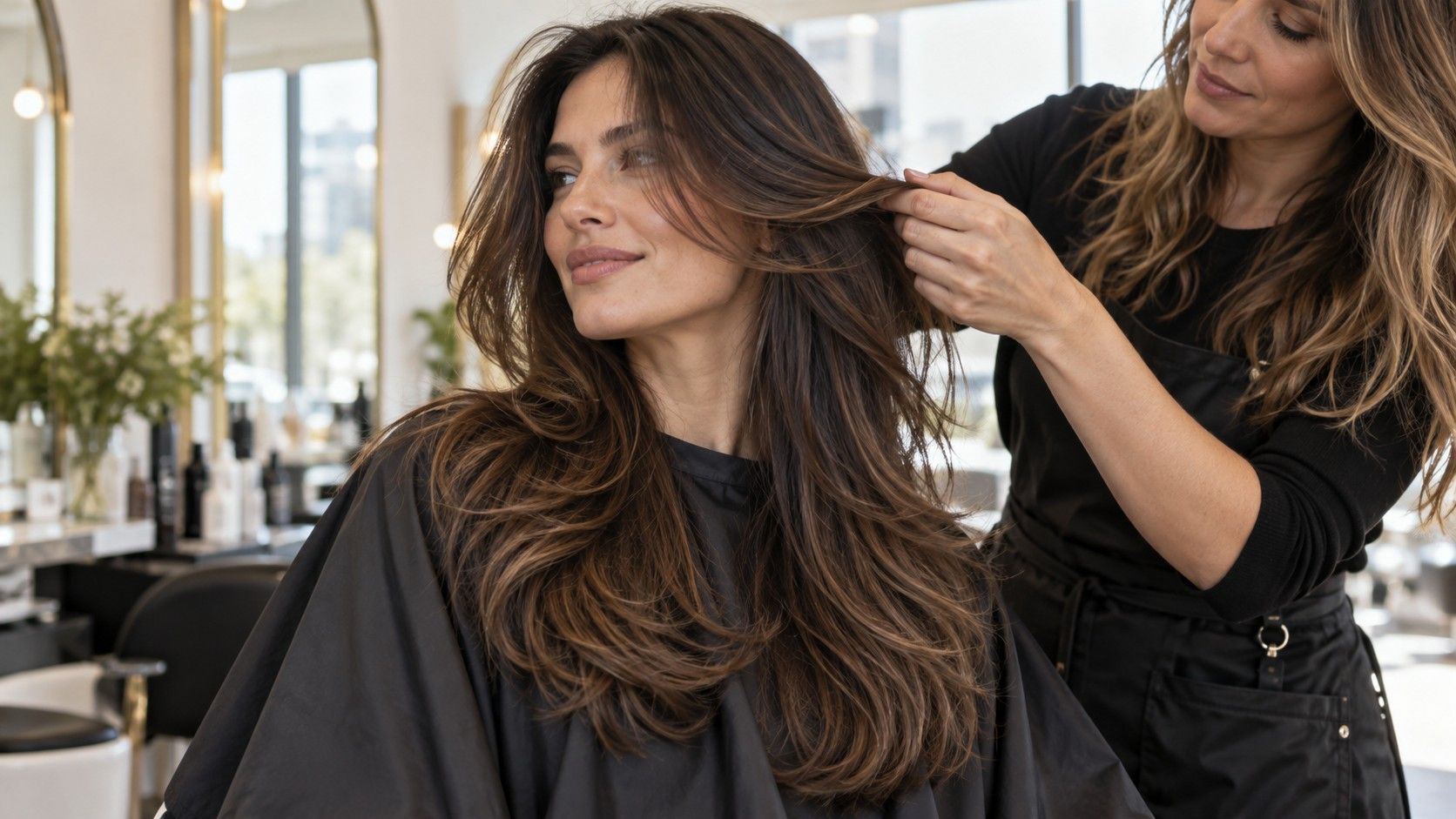
Long, blended layers usually begin below the chin or collarbone. They are the low-maintenance option because the shortest sections still reach a ponytail and do not flick outward at every humidity change. Butterfly-style layers bring more lift around the face and shoulders, but the shorter top pieces need more styling to show their intention. On naturally wavy hair they can look airy; on pin-straight hair they may sit quietly unless heat is involved.
| Layer pattern | Works well when | Watch for |
|---|---|---|
| Long blended layers | You want movement with an easy ponytail | Very subtle layers can disappear on dense straight hair |
| Face-framing layers | You want attention around cheekbones and jaw | Too-short pieces can feel disconnected from the rest |
| Butterfly-inspired layers | You enjoy a bouncy blow-dry and visible shape | The look falls flatter without root lift |
| Internal layers | Your hair is thick and feels bulky through the middle | Overdoing them can make ends look wispy |
A good consultation has a practical test: ask where the shortest layer will land when your hair is dry. Wet hair stretches, and an answer based only on a wet cutting line can be misleading. If your hair shrinks into waves or curls, leave extra room. The goal is not a technical label for the cut; it is a shape that still makes sense when you put your hair up, wear it natural, and see it from the side.
Face-framing pieces versus layers everywhere
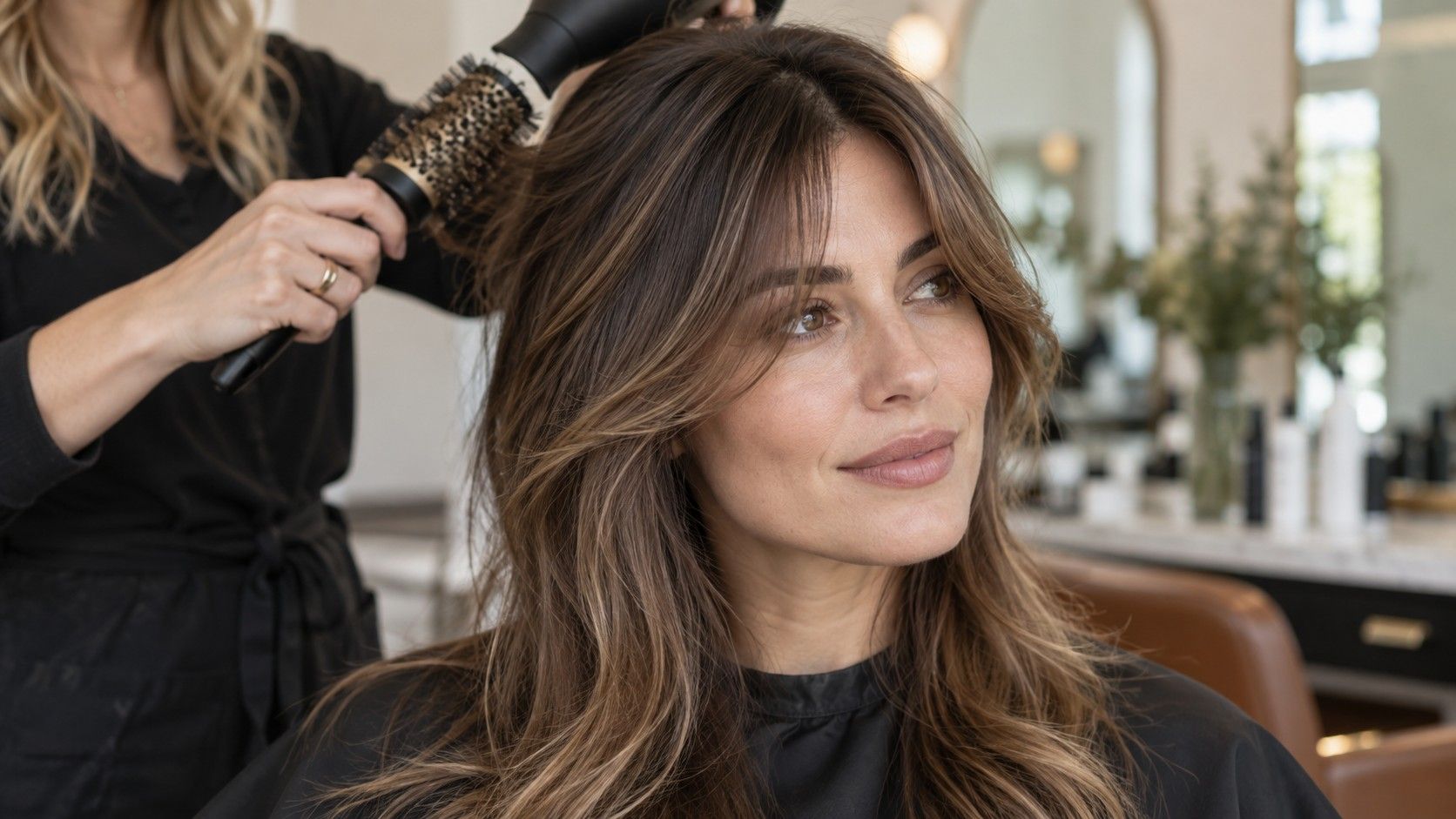
Face-framing pieces are a targeted way to change a long haircut. They can begin around the cheekbone, lip, or jaw and blend into the length behind them. Their job is to interrupt a flat front section, soften a strong parting, and give a blow-dry something to turn around. Because the rest of the hair remains comparatively full, they are often a sensible first step for someone nervous about layers.
All-over layers do more for thick hair that becomes triangular: narrow at the crown and broad at the ends. By removing some internal weight, the cut lets waves sit upward instead of stacking outward. The risk is that a stylist treats texture as a shortcut for shape. Razor-heavy ends and aggressive thinning may look loose on the day, then turn frizzy or see-through after several washes. Ask for a blended result rather than pieces that are visibly chopped apart.
Your usual part matters here. A center part exposes both front pieces equally, so a small difference in length shows. A deep side part concentrates weight on one side and can make a soft fringe-like layer look more dramatic. If you switch your part often, request a forgiving blend rather than a highly directional cut. Hair should not look unfinished simply because you moved the part by an inch.
Make long layers move on an ordinary morning
Layers do not require a salon routine, but they do need a little direction. After washing, apply a light leave-in through the lower lengths and keep root products close to the scalp rather than coating everything. Rough-dry until the hair is mostly dry, then use a medium round brush only on the crown and face-framing pieces. That small focused step gives the haircut a visible shape without turning every wash into a forty-minute project.
For an easy blow-dry, lift each front section away from the face, warm it, and let it cool in that direction before brushing through. The cooling part matters: warm hair is still flexible, while cooled hair holds the bend. If you prefer air-drying, twist the two front pieces away from the face and clip them loosely for ten minutes. It will not create a polished wave, but it prevents the layers from collapsing into the rest.
On the second day, avoid repeatedly running a hot tool over the ends. A little dry shampoo at the roots, a refreshed parting, and a quick bend through the top layer usually look fresher than re-straightening the whole head. Long layered haircuts look best when the ends retain some softness. Heat can make every separate line harsh, which defeats the point of a blended cut.
How to avoid the over-layered haircut regret
The common regret is not that layers exist; it is that too many short layers leave the bottom looking thin. This happens most often when fine hair is cut as if it had the density of a thick blowout, or when damaged ends are treated as something texture will disguise. If you have a short breakage layer around the shoulders, point it out. Cutting another intentional layer at the same height can make the overall shape look accidental.
Ask for a plan that can grow out calmly. Long layers should connect to one another, not create shelves that demand a trim every six weeks. For most long hair, a shape refresh every ten to fourteen weeks is enough, with a smaller face-frame adjustment only if it bothers you. Frequent trims are not a guarantee of faster growth; they are simply maintenance for the chosen outline.
Take a few pictures after the appointment: hair down from the front and back, air-dried, and in your usual ponytail. At the next visit, those photos make feedback specific. You can say that the crown needed more lift, the front felt too short, or the perimeter lost density. That is far more useful than asking for more layers or fewer layers in the abstract. The best layered hairstyles for long hair are built from those small, repeatable observations.