Choosing a haircut by face shape is less about finding one magic answer and more about deciding where you want the eye to land. A good cut can soften a strong jaw, make a forehead feel less dominant, or simply let your best features show. The useful version of a face shape hairstyle guide starts with your proportions, your hair’s behavior, and the amount of styling you will actually do on a weekday morning.
Start with proportions, not a rulebook
Face shape labels are shortcuts, not verdicts. Most faces are a mix: perhaps the cheekbones are widest, the jaw is gently squared, and the forehead is slightly longer. Stand in front of a mirror with your hair pulled back and look for three things: the widest point of your face, the length from hairline to chin, and whether your jawline reads curved or angular. A front-facing photo in daylight is often more honest than a bathroom mirror held too close.
Then look at the haircut silhouette rather than the name of the style. A bob that ends at the jaw puts attention at the jaw; a cut with crown height lengthens the overall outline; soft pieces near the cheekbones can interrupt a very round line. This is why the best hairstyle for face shape is rarely just “get a bob” or “avoid bangs.” The exact length, parting, density, and finish do more work than the label on a salon menu.
Use an oval face as a starting point, not a restriction
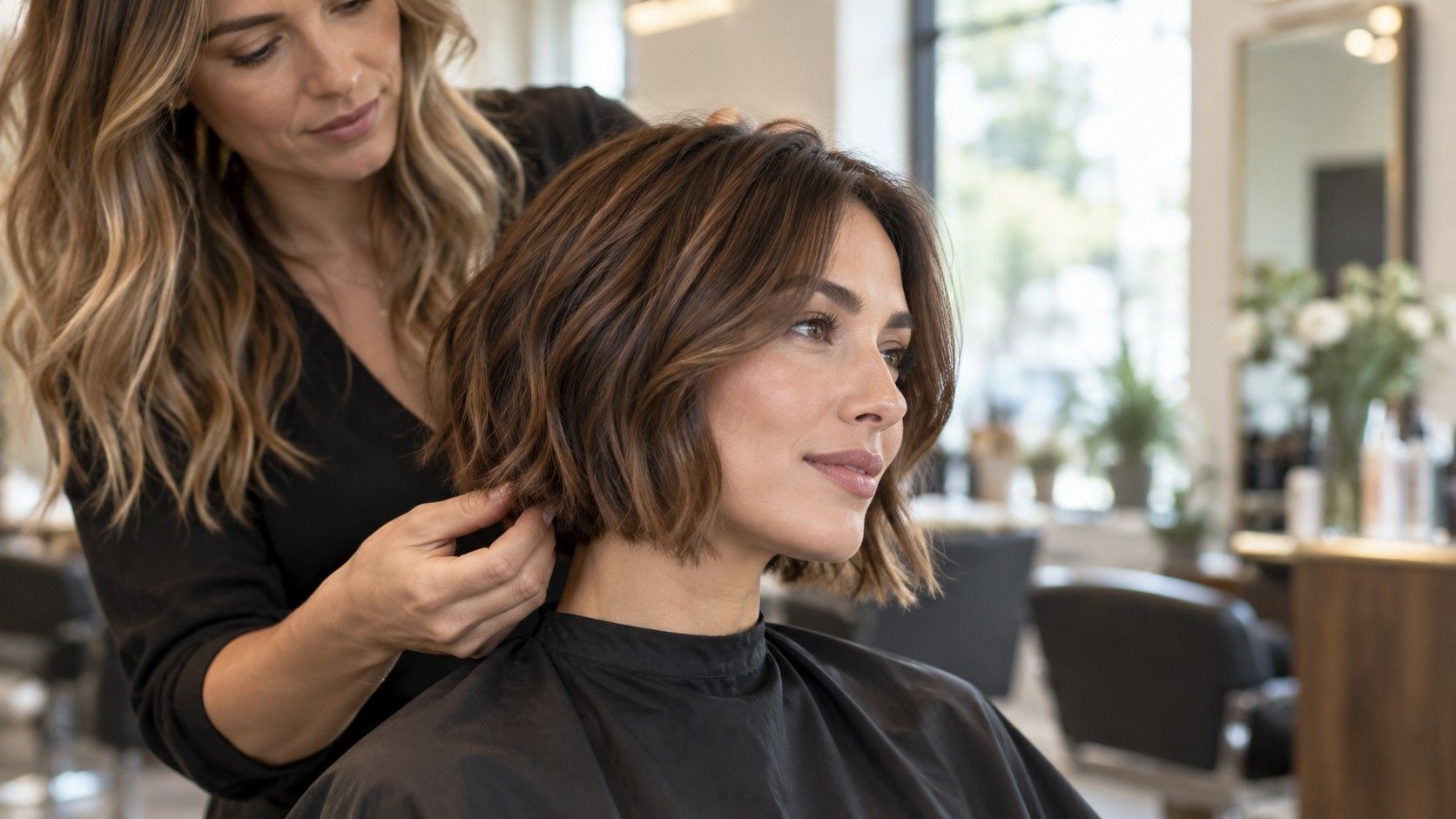
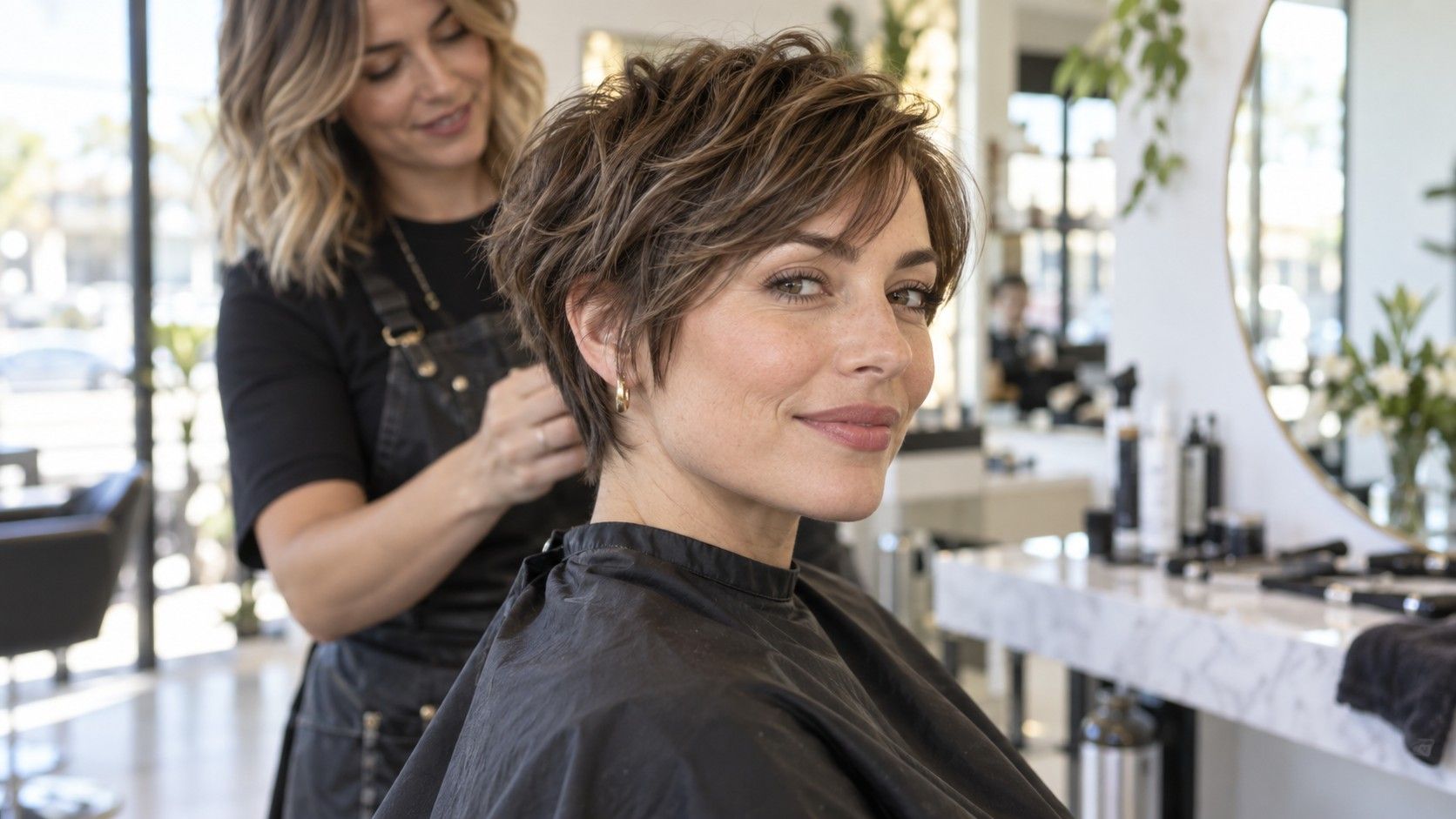
An oval face usually has balanced length and width, so it can carry a wide range of haircut shapes. That freedom is useful, but it still helps to choose a focal point. A blunt chin-length bob highlights the lower face and neck. Collarbone hair with long layers keeps the outline relaxed. A short pixie makes brows, eyes, and cheekbones much more visible, which is excellent if those are the features you enjoy emphasizing.
The trap with an oval face is choosing a style only because it is technically allowed. Very long, heavy hair with no movement can pull the eye downward; extremely high volume at the crown can make the face look longer than it is. If you are trying a dramatic change, ask the stylist to show where the perimeter will fall when the hair is dry. That line is more important than a flattering photo taken under salon lights.
Balance a round, square, or heart-shaped outline
For a round face, the goal is often to create a little vertical movement without hiding behind curtains of hair. A slightly off-center or side part, volume near the crown, and layers that begin below the cheekbones can make the outline feel more elongated. A long bob that finishes below the chin is usually easier to wear than a blunt, cheek-width bob. The distinction sounds minor until you see how much a horizontal line at the widest point can change a photo.
A square face often has a strong jaw and a broad forehead. Soft texture around the temples, a side-swept fringe, and layers that do not stop exactly at the jawline can reduce the boxy effect without pretending the jaw is a problem to solve. Think of rounded movement, not necessarily loose curls. A blunt micro-bob can look striking on a square face, but it is a deliberate graphic choice and needs confidence, regular trims, and a willingness to style it.
Heart-shaped faces tend to be wider at the forehead and taper toward a narrower chin. Side volume around the jaw, a jaw-length bob, or a soft fringe can make the lower half feel more present. Very heavy volume at the crown combined with a tiny chin-length crop can exaggerate the triangle, especially in profile. If you like short hair, keep some texture or width through the mid-lengths instead of stacking every bit of lift on top.
| Face tendency | Useful starting point | Detail to test before cutting |
|---|---|---|
| Round | Below-chin length, crown lift, longer face-framing pieces | Whether a blunt line sits at the widest part of the cheeks |
| Square | Soft layers, side movement, texture around the temples | Whether layers finish directly at the jaw |
| Heart | Width near the jaw, side fringe, balanced bob | Whether crown volume leaves the chin looking too narrow |
| Oval | Choose the feature you want to emphasize | Whether the cut adds unwanted length or heaviness |
Let the parting and layers do the fine tuning
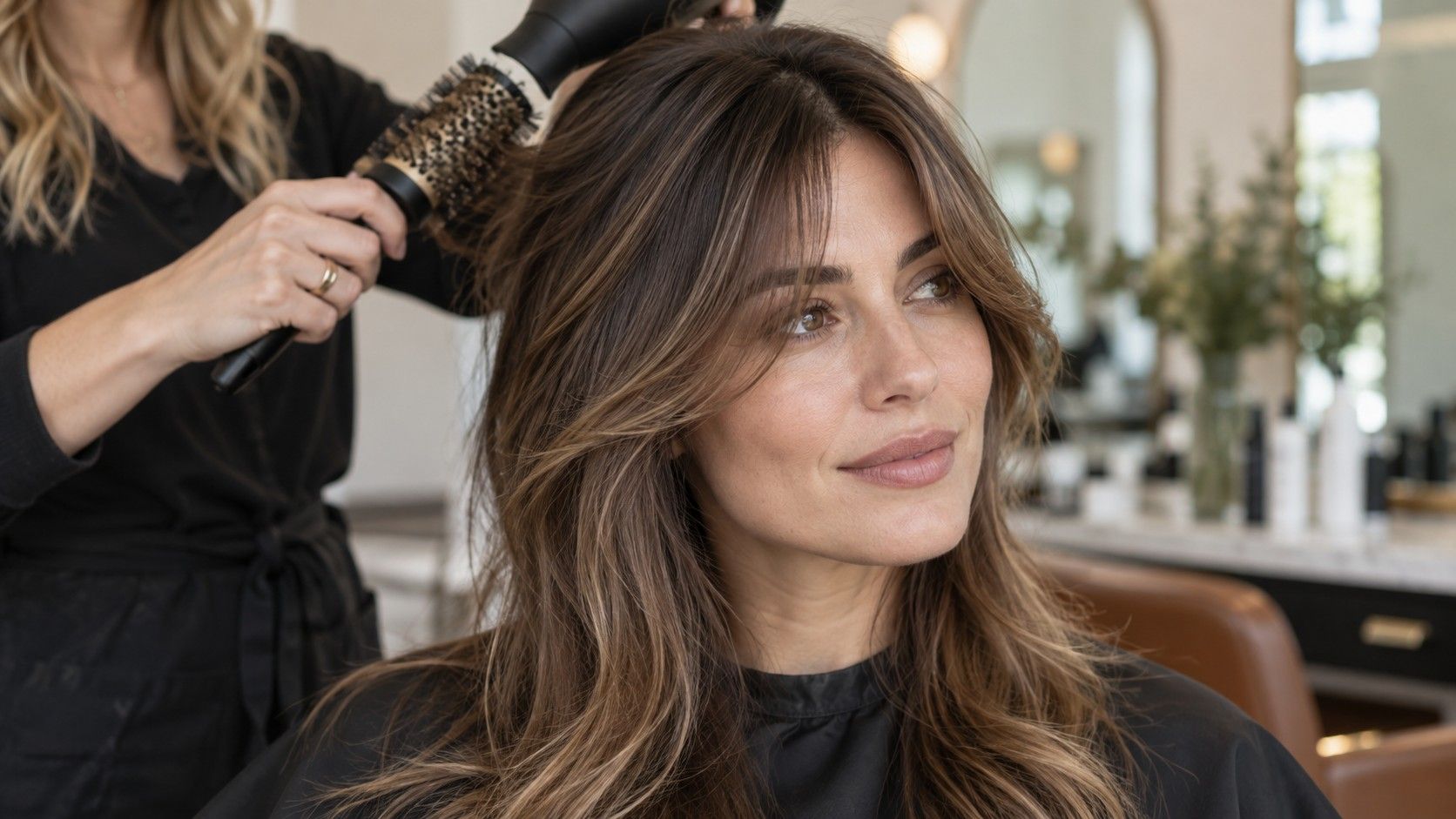
A parting is the fastest low-risk experiment in this whole process. A deep side part adds asymmetry and can soften a centered, very even outline. A middle part gives a clean vertical line and can look especially good when the hair has enough movement around the cheeks. Before committing to bangs or a major chop, wear your usual hair in two or three partings for a full day. Check it after commuting, after wind, and in a photo from a normal distance; the first five minutes in the mirror tell very little.
Face-framing layers work best when their starting point is intentional. Layers beginning around the cheekbones draw attention upward. Layers that skim the jaw can either flatter or emphasize it, depending on how blunt and thick they are. Longer layers that begin near the chin are forgiving for many face shapes because they move without creating a hard horizontal edge. If your hair is fine, ask for internal movement without removing so much density that the ends become transparent.
Match the idea to your texture and daily routine
A reference image with straight, dense hair is not a promise for coarse curls or very fine waves. Texture changes the visible width of a cut, the bounce of layers, and the amount of product needed to keep a fringe from splitting. Curly hair can make a short layered shape look wider and more sculptural than the same cut on straight hair. Fine hair may need a stronger baseline so it does not lose its shape between washes.
Be candid about your routine. A polished pixie can take ten minutes and a little paste every morning; an airy curtain fringe may need a quick blow-dry even if the rest of the hair air-dries. If you routinely tie your hair back for work, ask whether the shortest pieces will stay in the ponytail. The cut that looks best at an appointment but fights your habits is not the right cut, no matter how well it matches a face-shape diagram.
Bring useful references to the salon
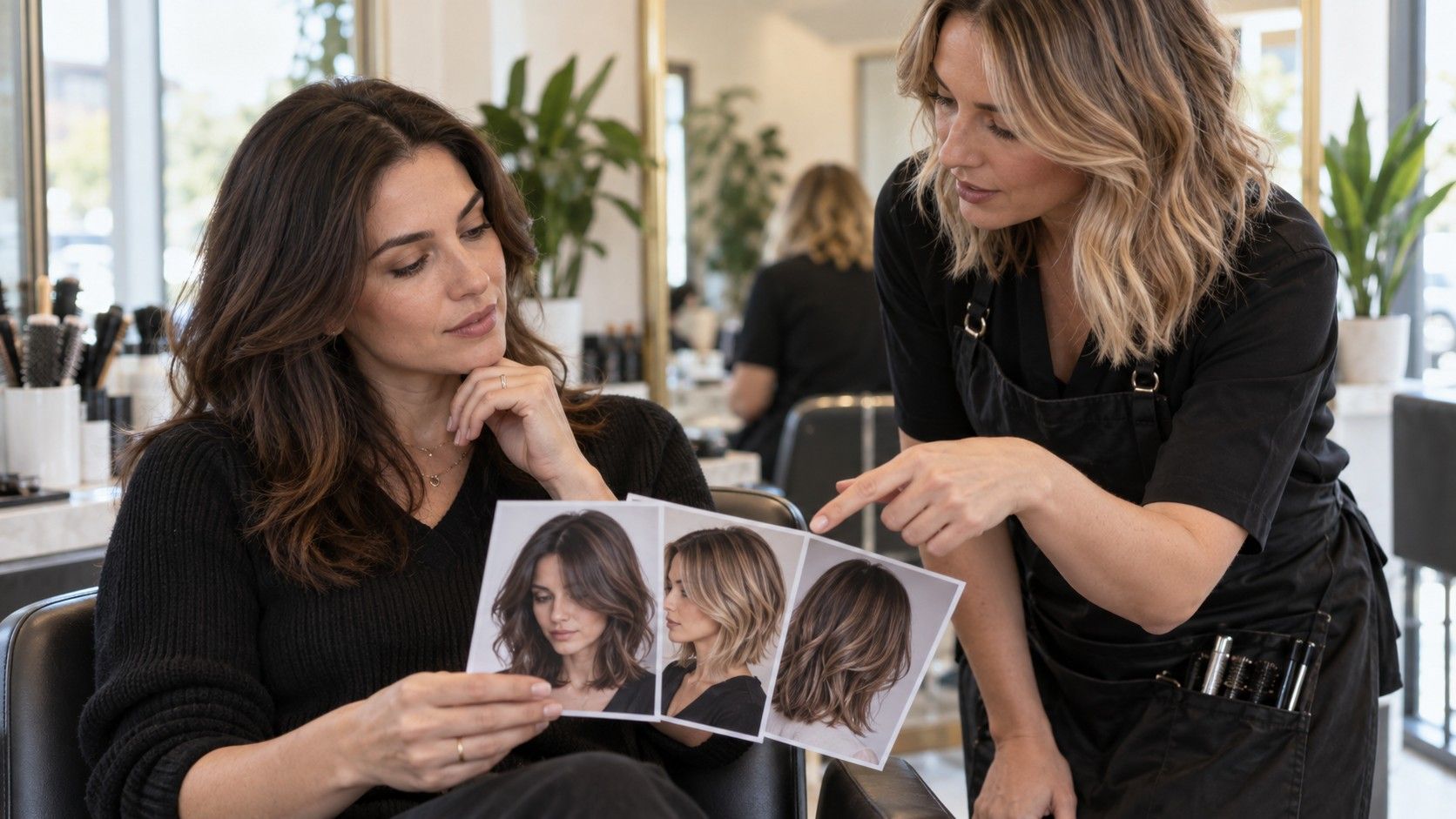
Bring two or three photos that show the qualities you want, not ten versions of the same celebrity. One photo can demonstrate the length, another the fringe, and another the texture. It also helps to bring one picture of what you do not want: a too-short nape, an overly layered perimeter, or a fringe that sits across the brows. A stylist can translate that much more easily than “make me look less round.”
Use specific questions at the consultation: where will the shortest piece hit when dry, how will the cut look if I air-dry, and what needs trimming in six weeks versus twelve? Ask to see the shape from the side and back before the final finish. A hairstyle should work as an outline in motion, not only as a front-view photograph. When you understand where the volume, parting, and perimeter are going, choosing a hairstyle for your face shape becomes a practical decision instead of a beauty rulebook.