The most useful hairstyles for thin hair do not try to make every strand behave like thick hair. They make the existing hair look intentional: a solid outline, a believable amount of lift, and a shape that still works after a rushed morning. Start by noticing whether the issue is strand diameter, overall density, or simply a haircut that has become too wispy at the ends.
Decide whether your hair is fine, low-density, or both
Fine hair describes the width of an individual strand. Low density describes how much scalp is visible when the hair is parted. They often arrive together, but not always. Someone with many fine strands can wear more layering than someone whose hair is medium in texture but sparse through the crown. This distinction is worth making before booking a cut, because a style that adds movement to fine, dense hair can make low-density hair look thinner.
Check your hair in daylight with its usual parting, not freshly curled for a photo. Look at the temples, crown, and lower perimeter separately. If the ends disappear into see-through points, the haircut needs a stronger baseline. If the scalp mainly shows at one part line, a change in parting and root direction may do more than removing another two inches of length.
Choose a perimeter that does not evaporate at the ends
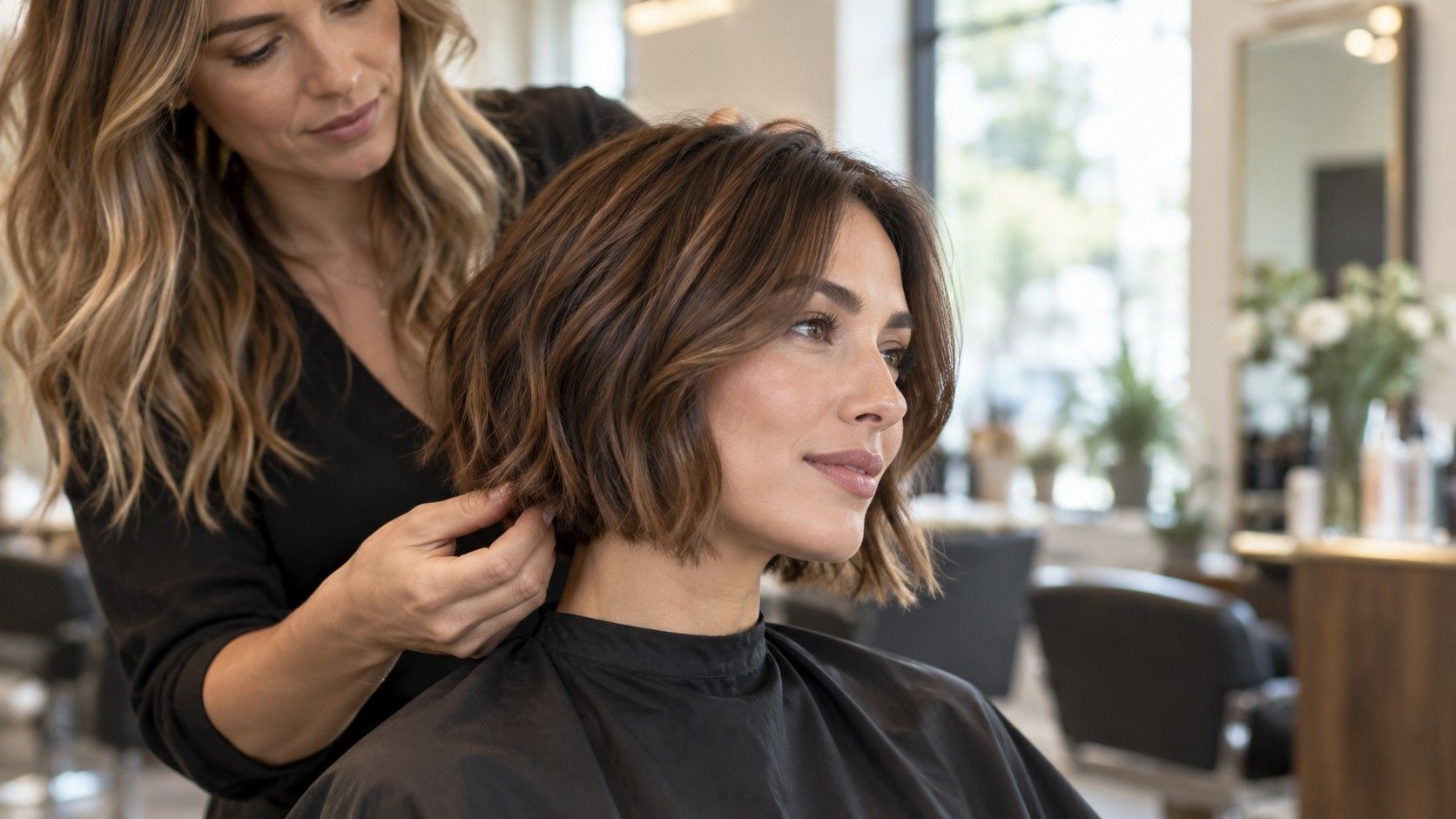
A blunt or softly rounded perimeter is usually the quiet workhorse in a best haircut for thin hair. A chin-length bob, collarbone lob, or one-length cut gives the eye a clear edge to follow. It does not have to look severe. A stylist can soften the corners around the face while keeping the back and lower edge substantial. The key is that the last few inches should read as hair, not as scattered tails.
Long hair can work as well, but it asks for more restraint. If length below the shoulders has become translucent, keep the strongest line around the collarbone and use only light face framing above it. Removing bulk with a razor or aggressive thinning shears is a common disappointment here: the result may feel airy in the salon and then collapse into a stringy outline after the first wash.
| Cut shape | Why it can help thin hair | Watch for |
|---|---|---|
| Blunt chin bob | Builds a dense-looking lower edge | Needs a trim when the outline starts fraying |
| Collarbone lob | Offers movement without losing all the perimeter | Keep layers long and sparse |
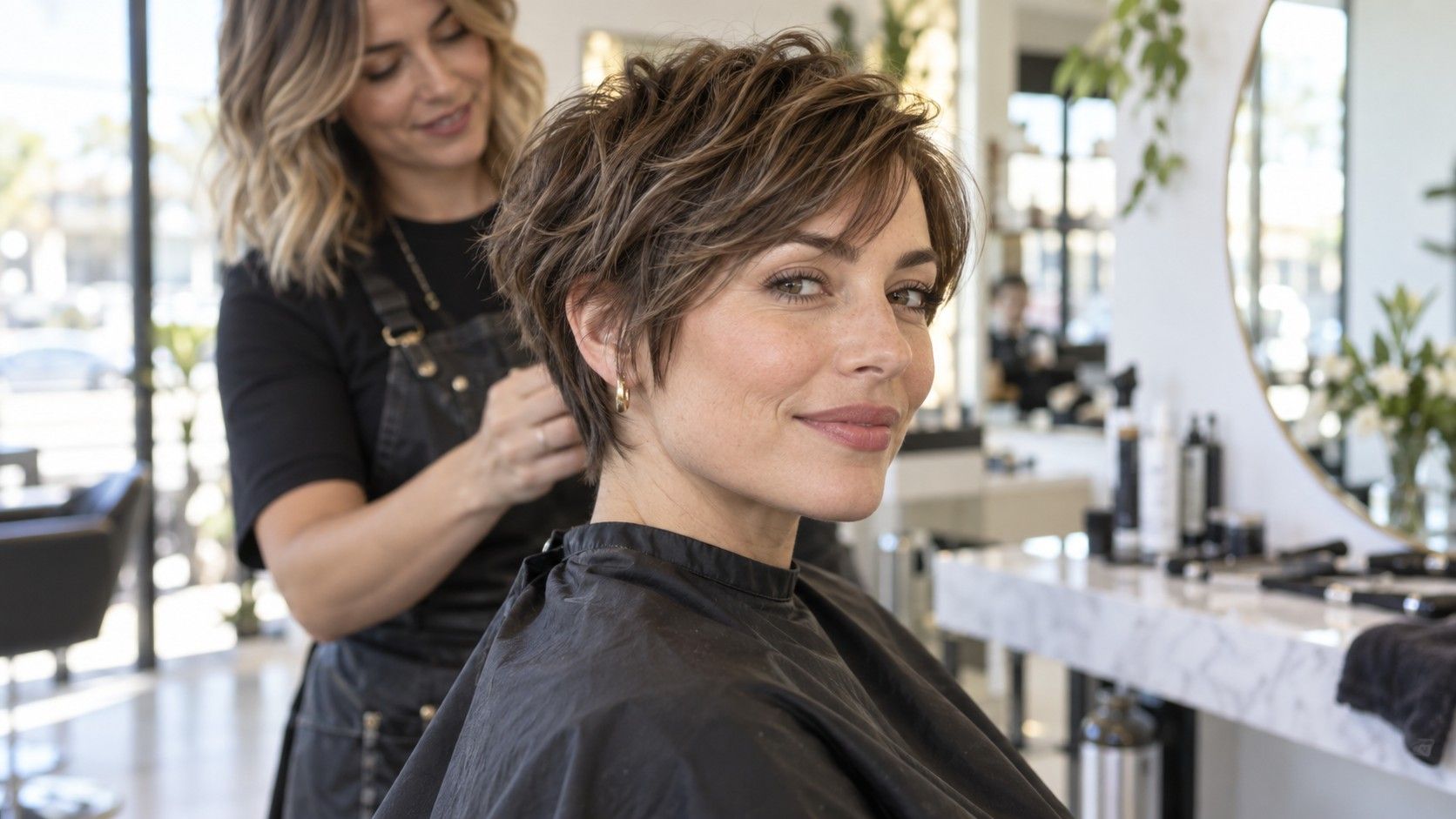
| Soft pixie | Uses short length to create crown lift | Ask where the fringe will separate naturally |
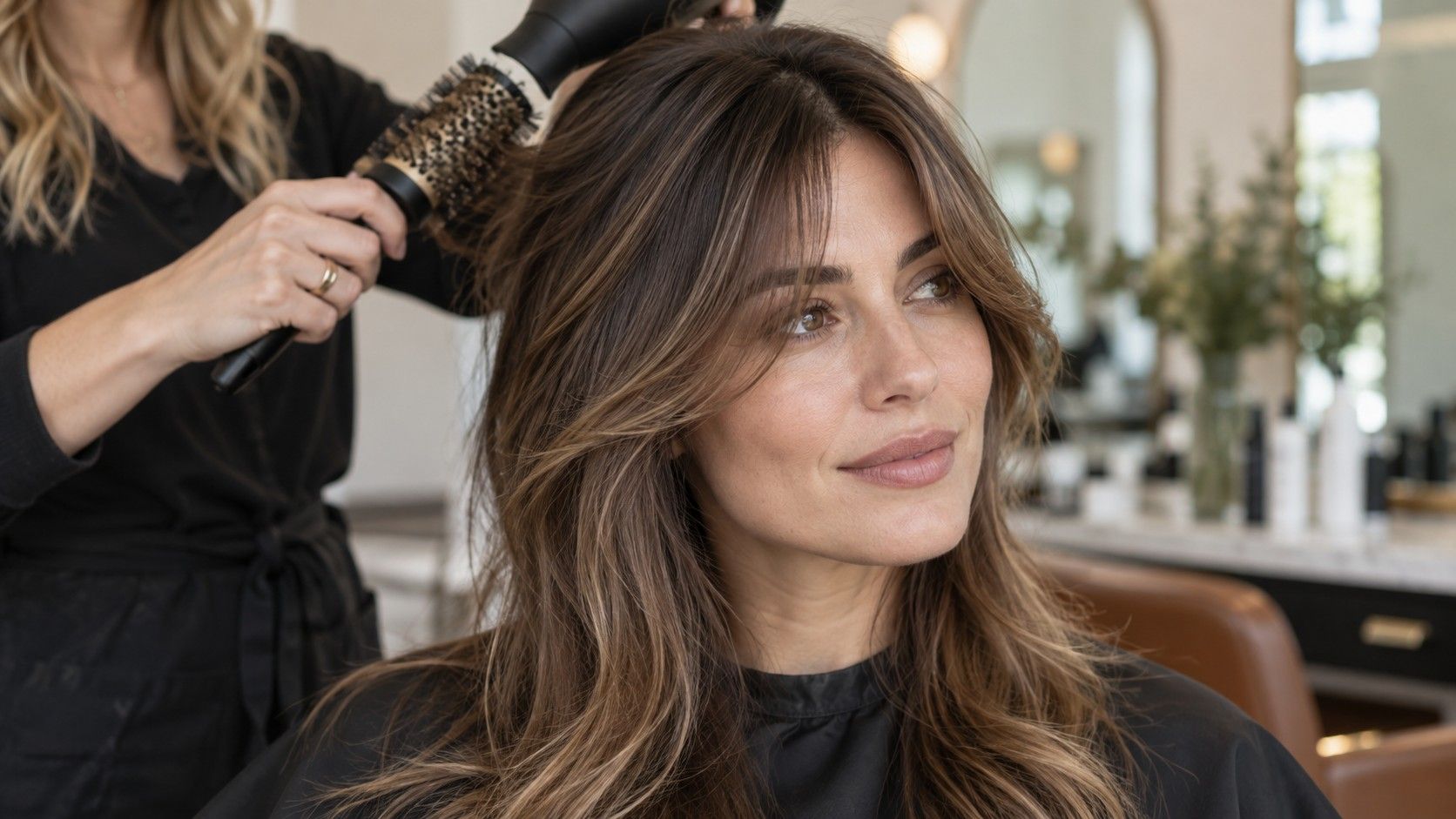
| Long one-length cut | Keeps more visual weight through the ends | May need a little root styling at the crown |
Use layers only where they solve a real problem
Layers are not automatically wrong for thin hair; they are simply easy to overdo. A few long internal layers can stop a collarbone cut from sitting like a helmet, while small face-framing pieces can give cheekbones some movement. The useful question is where the hair needs shape. If the crown lies flat but the ends are already light, lifting the crown with a shorter layer may help, while cutting more from the lower half will not.
Ask to see the cut before texturizing begins. A good practical request is: keep the perimeter strong, make the layers long enough to disappear into the shape, and do not thin out the ends. That language is clearer than asking for “volume,” which can mean anything from a rounded blowout to a heavily shattered cut. Thin hair hairstyle ideas look best when the silhouette stays simple and the movement is concentrated near the face or crown.
Create root lift without turning hair stiff
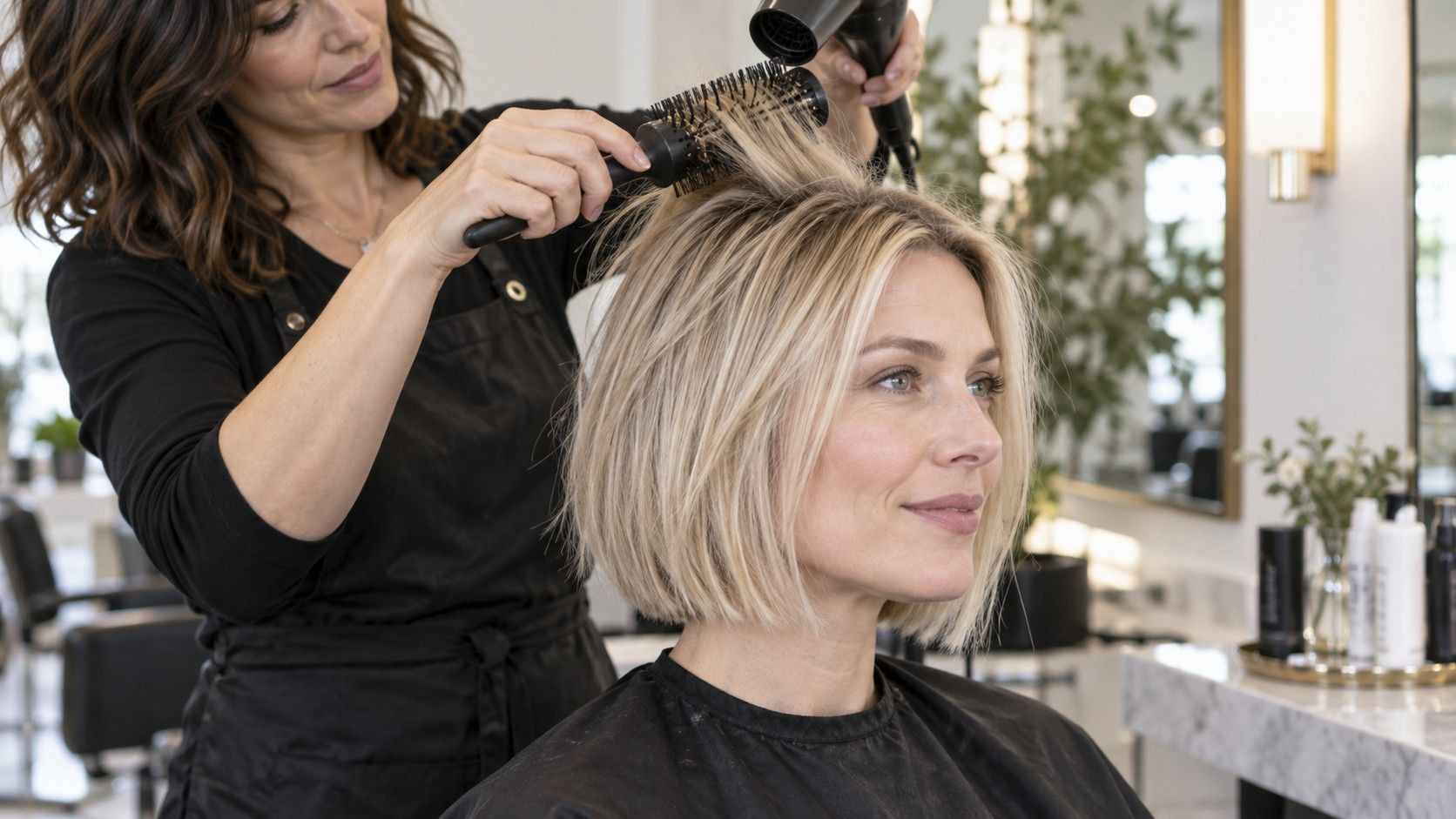
Volume products work best when they are placed with some discipline. A golf-ball amount of mousse through the roots of towel-dried hair is often more useful than coating the whole length with several sprays. Dry the roots first, directing air against the way the hair will fall, then let the mid-lengths follow. Even a quick rough-dry with the head tipped forward gives the crown a better starting point than trying to force height with a hot tool on fully dry hair.
For a polished finish, use a medium round brush only at the crown and front hairline rather than trying to brush every section. This leaves the ends less overworked. If you use a curling iron, make loose bends through the middle of the hair and keep the final inch relatively straight; a tight curl can separate thin ends and reveal more gaps. Finish with a flexible mist, then resist combing it repeatedly once it has cooled.
Change the parting before changing the entire haircut
A fixed center part can expose a narrow strip of scalp, especially when hair has been trained to fall there for years. Shift it a centimeter, make a gentle diagonal, or alternate the side after washing. The goal is not to disguise anything with an extreme sweep. It is to break the exact line where the roots habitually lie flat. A soft side part also gives a bob or lob an asymmetrical lift without adding more layers.
Color can support the same effect when it is subtle. Fine ribbons around the face or a shade variation close to the base color create depth as the hair moves, whereas dramatic high-contrast stripes can make the spaces between strands more obvious. Keep the conversation focused on dimension, not on a promise of thicker hair. The haircut and daily styling do the structural work; color is only a visual assist.
Make the style survive ordinary weekdays
The test for any thin-hair style is not the first hour after a blowout. It is the late afternoon, a little humidity, a coat collar, and the day you have ten minutes to get ready. Choose a version of the cut that still looks balanced when air-dried. A blunt lob with a natural bend is forgiving; a high, teased crown that depends on dry shampoo and a full set of rollers is not for everyone.
Plan trims before the perimeter becomes transparent, usually based on how quickly your ends split and lose their line rather than a rigid calendar rule. Between appointments, keep conditioner mostly from mid-length to ends so the root area does not become weighed down. If a style repeatedly needs more powder, more teasing, and more heat to look acceptable, that is useful feedback: the shape is probably asking your hair to do a job it cannot comfortably maintain.