Hairstyles for round faces work best when they create a shape you enjoy, not when they are treated as a set of rules for concealing features. Face shape is only one part of the picture; hair texture, density, glasses, parting, and personal style all change the final effect. Still, a few simple choices about length and volume can make a haircut feel more balanced and easier to wear.
What “balancing” a round face actually means
A round face often has similar width through the cheeks and a softly curved jawline. That does not mean it needs to be made narrower. In haircut language, balance usually means deciding where to place visual emphasis. Height at the crown, a piece that falls past the cheekbone, or a diagonal part can introduce vertical or angled lines. The face remains visible; the haircut simply gives the eye more than one direction to travel.
Do not diagnose your face shape from a single front-facing phone photo. A wide lens, a raised chin, or hair pulled tightly back can exaggerate roundness. Look at several photos in ordinary light, including a three-quarter angle. Then decide what you actually want from the cut: more structure near the jaw, a softer forehead, a longer-looking neckline, or just a style that does not flatten at the temples.
Use length and crown volume with intention
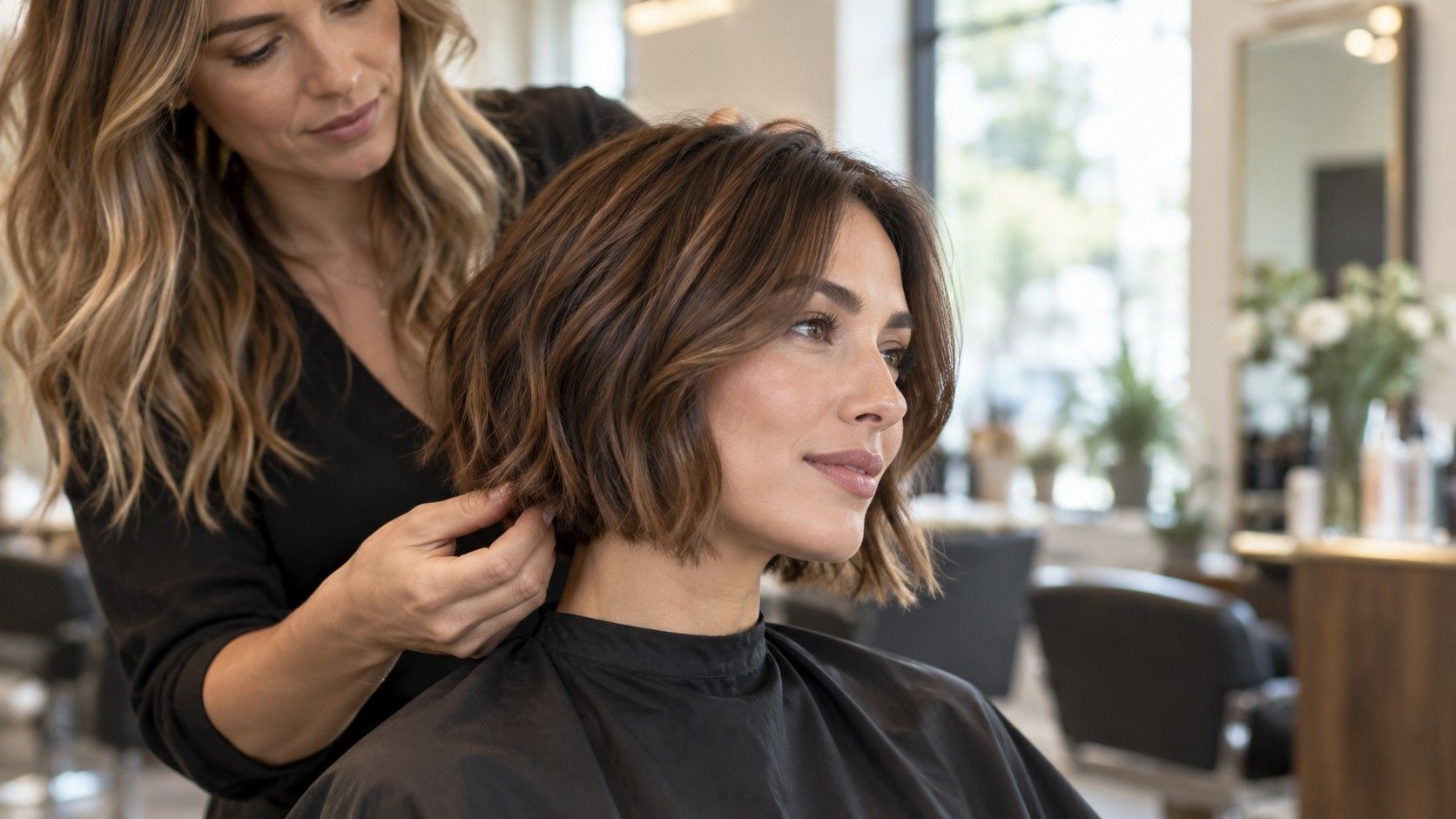
Medium and long cuts often suit a round face because hair extending below the jaw creates a vertical frame. A collarbone lob, long bob, or layers beginning below the cheekbone can all do that without looking severe. The important detail is placement. Volume concentrated at the widest point of the cheeks can make the outline feel broader, while a little lift at the crown and movement below the chin creates a more elongated silhouette.
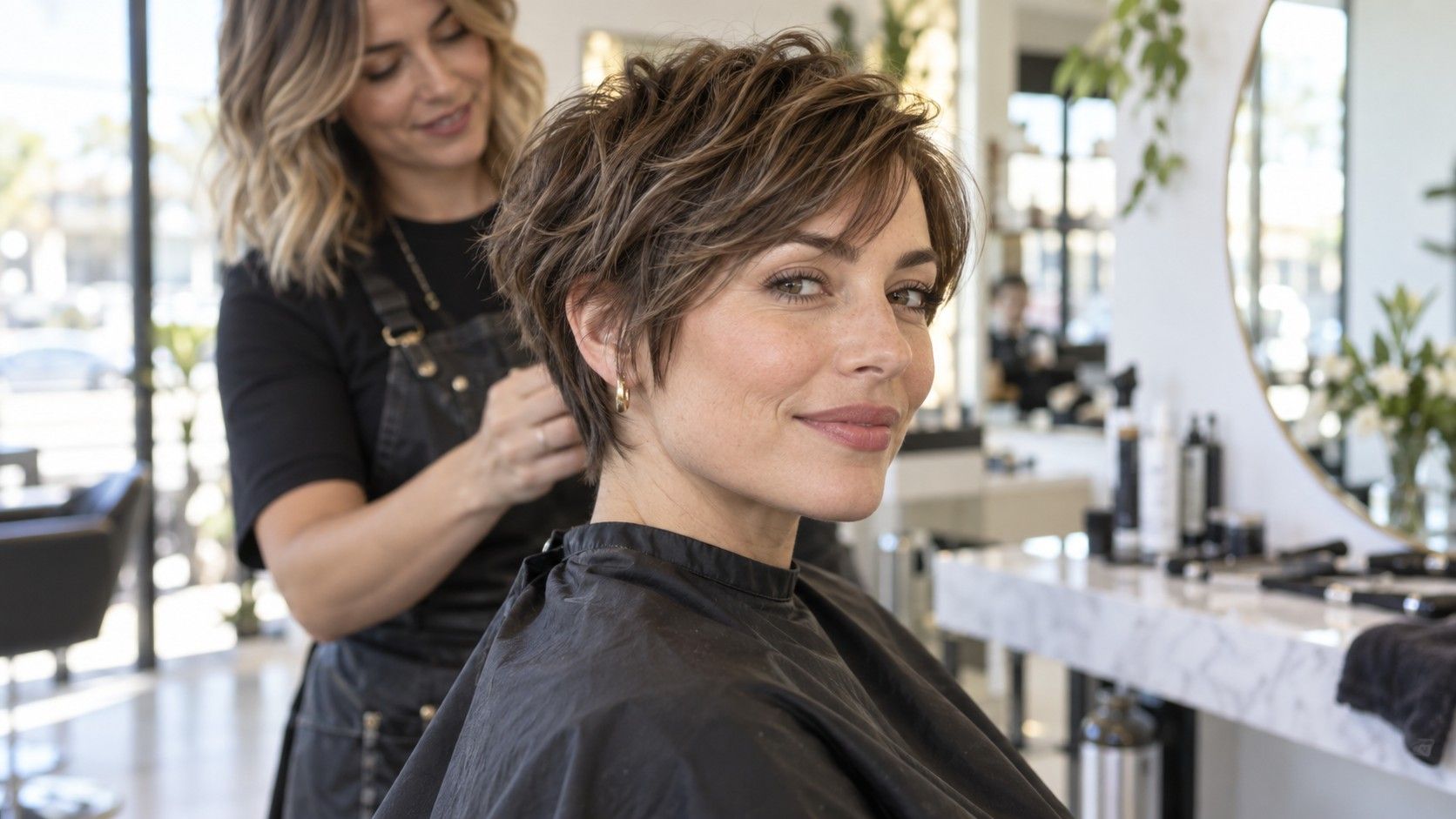
Short cuts are not off limits. A pixie with height through the top, a tapered nape, or a textured fringe can look striking because it exposes the face deliberately. The less useful version is a short cut that is very flat on top and very wide over both ears unless that rounded silhouette is exactly what you like. Bring in your natural texture when discussing this: curly, coily, wavy, and straight hair create width in different places.
| Style direction | Visual effect | Practical detail |
|---|---|---|
| Collarbone lob | Keeps length below the jawline | Ask for movement that starts below the cheeks |
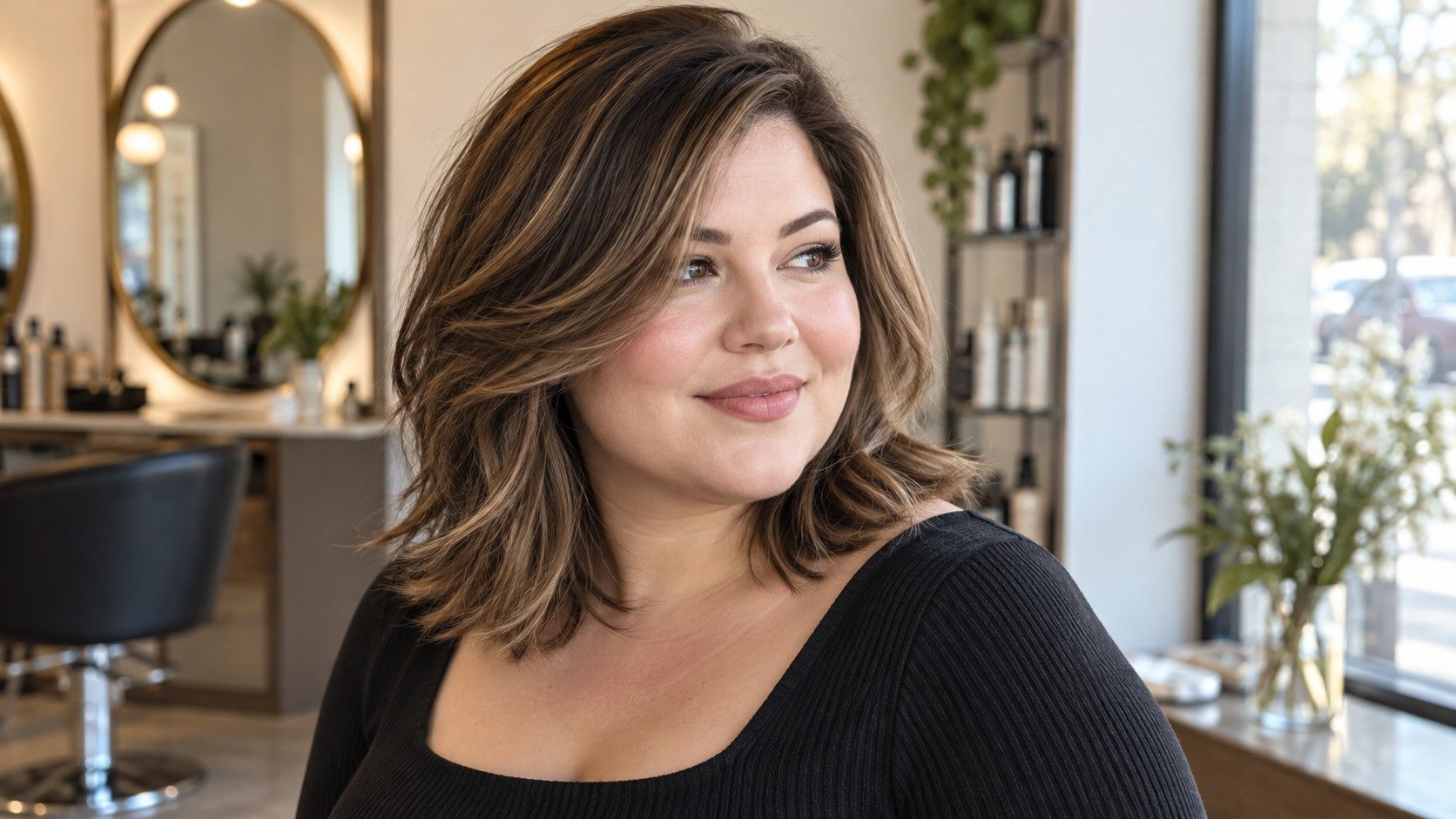
| Side-parted medium cut | Adds a diagonal line and soft crown lift | Test the part where your hair naturally separates |
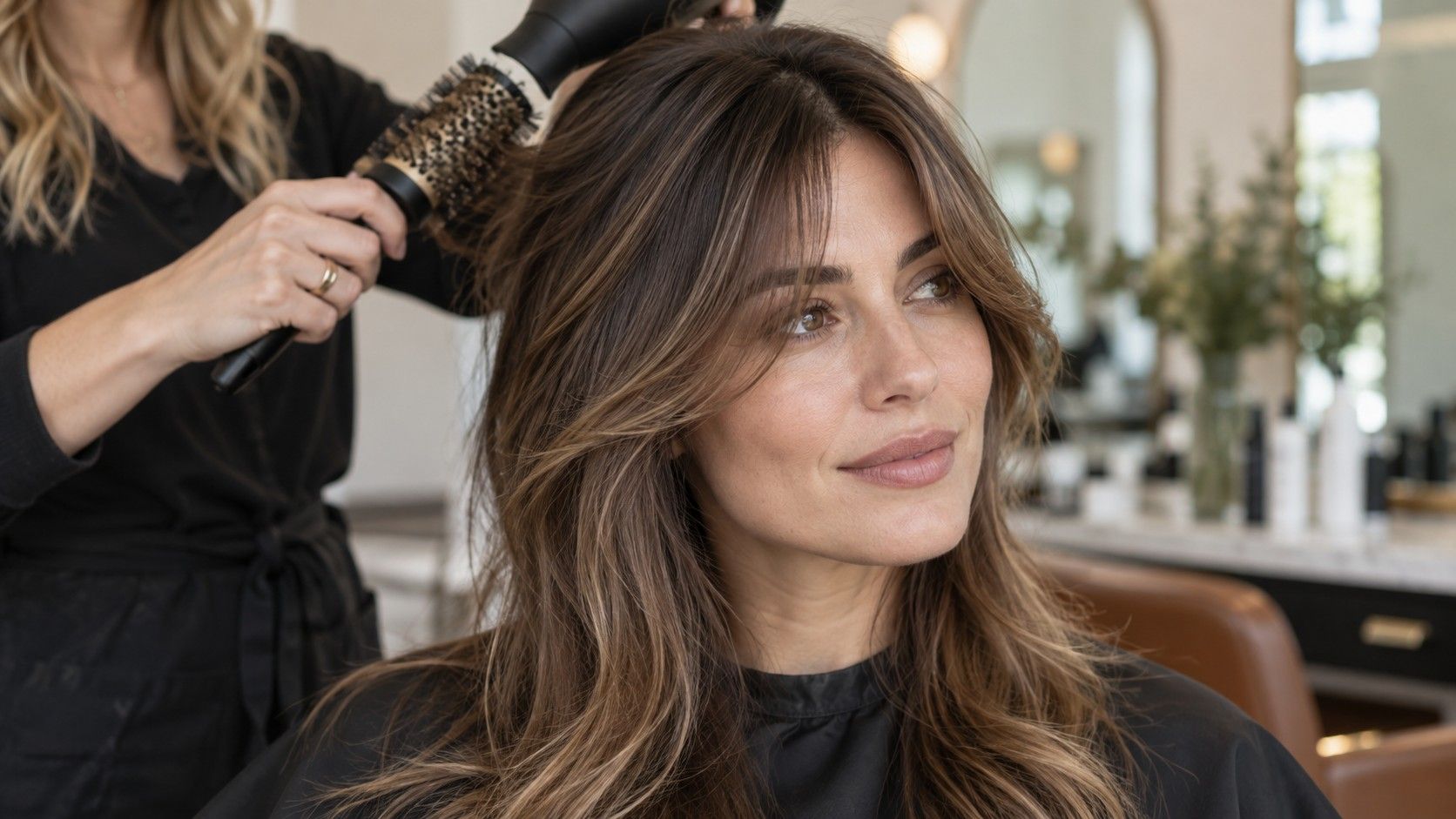
| Long face-framing layers | Creates vertical movement around the face | Keep the shortest piece long enough to style |
| Textured pixie | Places attention at the crown and eyes | Plan how the fringe will grow between trims |
Make bangs, parts, and face framing do different jobs
Bangs are often discussed as if there is one correct answer for a round face. In practice, the useful choice depends on forehead height, cowlicks, and how much daily styling you will accept. Curtain bangs that open slightly at the center and lengthen toward the cheekbones can create a soft vertical break. A wispy side fringe gives a diagonal line. A fuller blunt fringe can also work if it feels like your style, especially when the rest of the cut has some height or length.
Parting is the lowest-risk experiment. A center part can be elegant and modern, but it may sit very flat if the hair naturally separates that way. A gentle side part or off-center line changes the distribution of volume without cutting anything. Try it after washing, then live with it for a day rather than judging it in the bathroom. A part that slips back to the middle is not a failure; it is evidence about how your roots want to behave.
Choose short and medium cuts by texture, not by a chart
For straight or loosely wavy hair, a textured lob can keep the ends substantial while adding a small bend around the lower face. Ask for the shortest face-framing pieces to start below the cheekbone if you want less width in that area. For fine hair, avoid taking too much out of the perimeter; a crisp base often looks fuller than many disconnected layers. A smooth finish with a lifted crown can be enough structure on its own.
Curly and coily hair needs its own version of this discussion. A rounded shape can look beautiful on a round face, especially when the volume is a chosen statement rather than an accident. If you prefer a more vertical outline, a stylist can preserve height near the crown and control width at the sides with thoughtful layering. The final dry shape matters far more than an image of the same cut on straight hair. Ask to see where the curl will sit after shrinkage, particularly around the fringe.
Use reference photos with your own hair in mind
The best haircut for round face research is selective. Save images that share something real with you: similar density, similar curl pattern, similar amount of styling effort, or a similar hairline. Then write down what you like about each one. “I like the crown height,” “I want the fringe to open,” or “I do not want the ends to sit on my cheeks” gives a stylist something usable. A collection of ten unrelated celebrity photos usually gives less direction.
It also helps to bring one photo of a result you do not want. This can prevent a small misunderstanding about layers or bangs from becoming the whole appointment. If you wear glasses, mention that the front pieces should work with the temple arms. If you tie your hair back for work, test a few pieces around the face before committing to a very short fringe. These ordinary details are what make a round face hairstyle feel personal instead of borrowed.
Judge the cut after you have styled it yourself
A new haircut should be assessed after at least one normal wash and styling session. Salon volume can be lovely, but it may not resemble your ten-minute weekday routine. Pay attention to whether the crown stays lifted, whether the part still sits where you want it, and whether the face-framing pieces land in a useful place when the hair dries naturally. Small adjustments are common and usually more productive than starting over with a drastic correction.
Most importantly, let your preference outrank a rigid face-shape rule. A blunt bob, full fringe, center part, or wide curly shape can all look right on a round face when it reflects the person wearing it. Use the guidelines as tools for predicting proportion, then keep the choices that make you feel most like yourself. A haircut that is easy to maintain and pleasant to see in an unposed mirror will outlast any trend label.